Local sources from Romania: Digi24, HotNews.ro.
UK coverage: The Guardian.
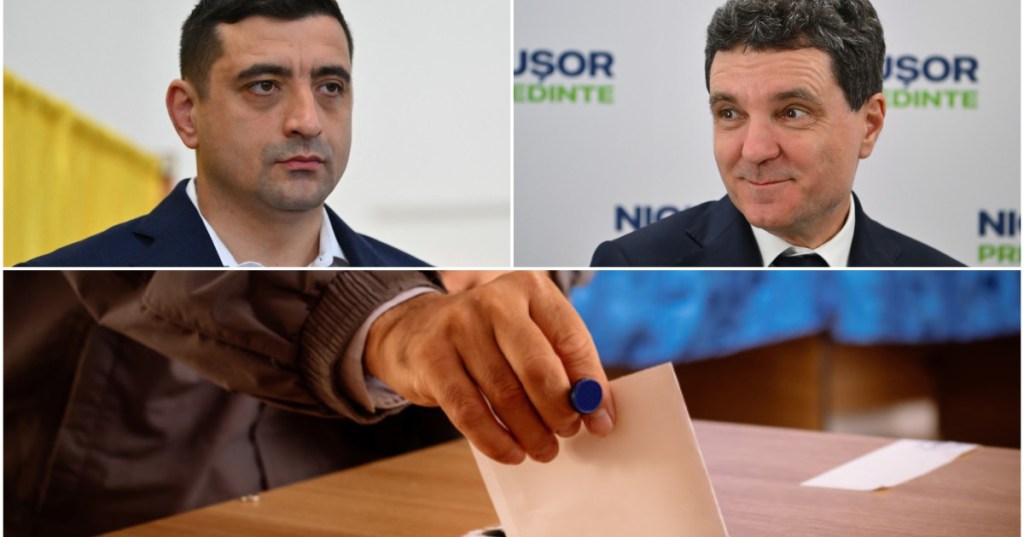
In a surprising turn of events, ultranationalist and far-right candidate George Simion has emerged as the clear winner in the first round of Romania’s presidential election rerun. Simion, the leader of the far-right Alliance for the Union of Romanians (AUR), garnered significant support with his opposition to military aid to Ukraine and criticism of the EU’s leaders. His victory sets the stage for a runoff election against a centrist candidate, which could potentially disrupt Romania’s pro-western stance and have implications for the EU and NATO.
According to the real-time results published on prezența.roaep.ro, Simion initially took the lead, followed by Crin Antonescu, Victor Ponta, Nicușor Dan, and Elena Lasconi. However, as the votes from 34% of the polling stations were counted, Nicușor Dan, the mayor of Bucharest, surpassed Antonescu to secure second place. With 99.99% of the minutes centralized, Simion obtained 40.94% of the votes, while Dan received 20.99%.
The battle for second place was intense, with Dan gradually closing in on Antonescu. At one point, Dan’s supporters erupted in applause and joy as he overtook Antonescu, solidifying his position in the runoff. Antonescu graciously acknowledged his defeat and left the coalition’s campaign headquarters.
Simion’s lead in the first round is significant, but the runoff election will determine the final outcome. The second round is scheduled to take place in two weeks, on May 18th, where Simion and Dan will compete for the Cotroceni seat.
In a surprising twist, Nicușor Dan, the independent candidate, emerged as the winner in Surfers’ Paradise, an Australian suburb. Dan received 87 votes, narrowly surpassing Simion’s 81 votes. This victory in a distant location highlights the global reach and impact of Romania’s presidential election.
The implications of Simion’s potential victory are far-reaching. His ultranationalist and far-right views, coupled with his opposition to military aid to Ukraine and criticism of the EU’s leaders, could lead to a shift away from Romania’s pro-western stance. This could potentially disrupt the country’s relationship with the EU and NATO, as well as have broader implications for the region.
As the runoff election approaches, all eyes are on Romania to see how the political landscape will evolve and what impact it will have on the country’s future trajectory and international relations.

