Local sources from United States: CNN, CBS News.
UK coverage: The Weather Channel.
Multiple people were injured in a series of shark attacks that occurred on July 4th at Surfside Beach and Crystal Beach in Texas. The incidents have caused panic among beachgoers and raised concerns about the presence of sharks in the area. Local authorities have issued warnings and increased patrols to ensure the safety of visitors.
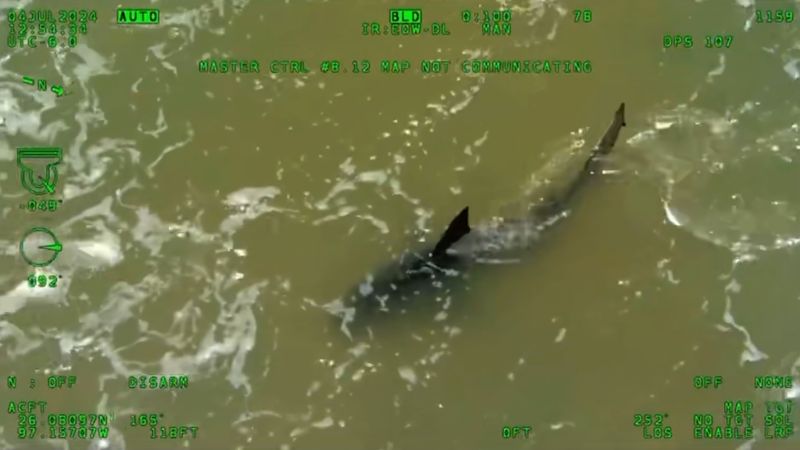
According to a report from CNN, four people encountered a shark while in the waters off South Padre Island. Two individuals were bitten, and two others had close encounters but were not seriously injured. The bite victims were taken to Valley Regional Medical Center in Brownsville for treatment. One of them has been flown out for further medical attention.
The attacks in Texas were part of a larger trend, as CBS News reported that there have been at least 15 shark attacks in U.S. waters this year. The incidents on July 4th added to this growing number.
In Florida, a 26-year-old man was bitten by a shark off New Smyrna Beach, making it the second shark bite reported at the beach during the Independence Day holiday week. The man, who was visiting from Sarasota, was bitten on his left foot while floating in an inner tube in water 5 feet deep. His injuries were not life-threatening, and he was transported to the hospital for further treatment.
Another shark attack occurred in Florida when a 21-year-old from Ohio was bitten at New Smyrna Beach while playing football in knee-deep water. Like the previous incident, the injuries were not life-threatening.
The Texas Parks and Wildlife Department stated that shark encounters of this nature are not common in Texas, and when they do occur, they are usually a case of mistaken identity by sharks looking for food. The department believes that the attacks in South Padre Island were likely associated with the same shark, which later swam to open waters.
Local authorities have taken immediate action to address the situation. South Padre Island Beach authorities have been patrolling the shoreline and using drones to monitor the area for any signs of the shark. A Texas Department of Public Safety helicopter was also deployed to deter the shark from approaching the shore.
The incidents have highlighted the need for further precautions to prevent future shark attacks. The International Shark Attack File, run out of the University of Florida, has reported fewer than 10 shark bites in Texas since 2012. However, neighboring states like Florida and Hawaii have had significantly higher numbers of reported shark bites.
As beachgoers remain on high alert, it is crucial for authorities to continue their efforts in ensuring the safety of visitors. Our thoughts are with the injured individuals and their families, and we hope for their speedy recovery.
 TheLittleTwentieth - Renowned Papers Edition, AI Infused