Local sources from Vietnam: BBC, Radio Free Asia.
UK coverage: The Telegraph.
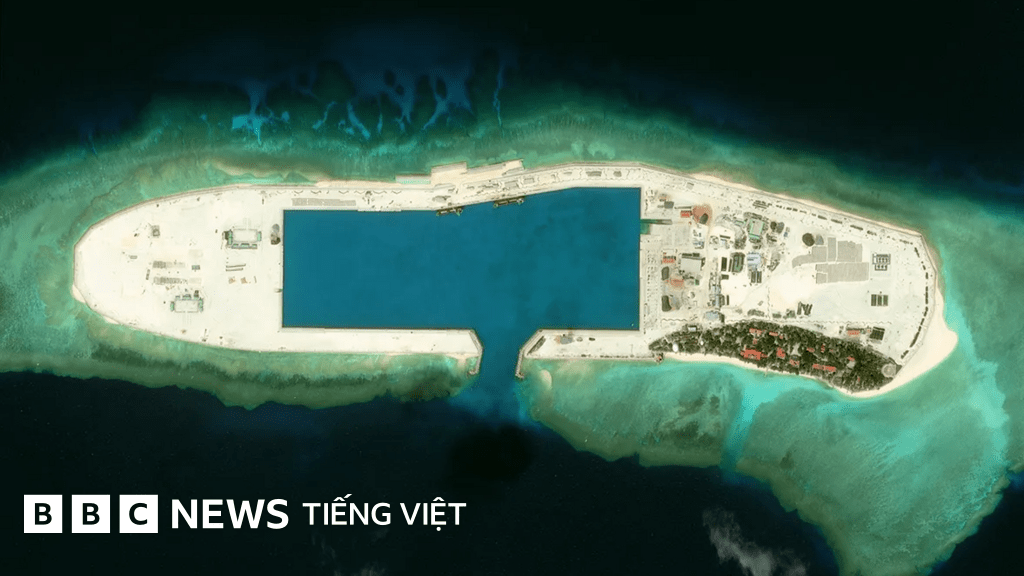
Vietnam has been ramping up its military capabilities in the South China Sea, marking a significant escalation in the strategic landscape of the region. According to recent satellite imagery, Vietnam is undertaking extensive construction on various reefs in the Spratly Islands, pushing forward with a nearly completed runway on Barque Canada Reef and engaging in dredging and land-filling operations at multiple other locations including Alison Reef, Collins Reef, East Reef, Landsdowne Reef, and Petley Reef. These developments come amid a backdrop of increasing militarization of the area, with new military outposts also identified on Amboyna Cay, Grierson Reef, and West Reef. This rapid transformation of previously unassuming sandbanks into formidable military assets places Vietnam as a notable competitor to China in this hotly contested archipelago, raising questions about future regional dynamics and stability. The Center for Strategic and International Studies (CSIS) has highlighted this significant expansion, noting that since 2021, Vietnam has extended its construction activities across 21 entities it controls in the Spratlys, potentially matching or even exceeding the scale of China’s island-building efforts. This shift from isolated fortifications to more expansive and possibly militarized infrastructures suggests a strategic pivot aimed at deterrence rather than provoking outright conflict, according to experts. Yet, China has reiterated its sovereignty claims over the area, opposing Vietnam’s construction efforts. The situation underscores the complex power play in the South China Sea, a crucial maritime corridor with substantial economic and strategic implications. On another front, reports from Radio Free Asia indicate that between November 2023 and June 2024, Vietnam expanded its territory by 280 hectares across 10 of the 27 entities it controls in the Spratly Islands. This activity, which is part of a broader initiative rooted in a 2007 Communist Party resolution, aims to significantly contribute to Vietnam’s GDP. However, this aggressive expansion has not been without criticism. Neighboring countries, including Malaysia and the Philippines, have expressed concerns, and there are growing apprehensions about potential environmental impacts and further escalations in regional tensions, particularly with China. The developments pose a complex challenge for ASEAN’s cohesion and the broader strategic stability of Southeast Asia. As Vietnam continues to fortify its position in the Spratly Islands, the international community remains watchful of the potential implications for regional power dynamics and the delicate balance of interests in the South China Sea.
 TheLittleTwentieth - Renowned Papers Edition, AI Infused