Local sources from United States: AOL.com, yahoo.com.
UK coverage: UNILAD.
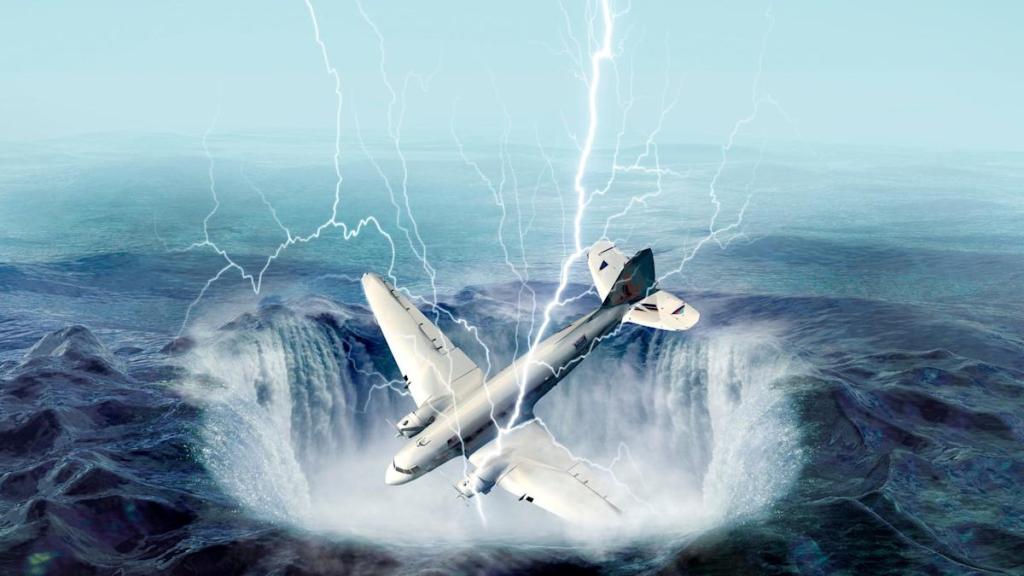
The Bermuda Triangle, a vast expanse of the Atlantic Ocean bordered by Florida, Puerto Rico, and Bermuda, has long captivated the imagination of the public and researchers alike with its mysterious disappearances of ships and airplanes. Recent insights from scientists and oceanographers are shedding light on plausible explanations, moving the conversation away from supernatural speculations to more scientific interpretations. Dr. Simon Boxall, an oceanographer from the University of Southampton, has proposed a theory that rogue waves, which can reach heights of up to 100 feet, are a significant factor behind the enigmatic incidents in this area. His theory, supported by experiments and a detailed analysis of the environmental conditions unique to the Triangle, suggests that these sudden and massive waves could be responsible for the historical disappearances dating back to the loss of the USS Cyclops in 1918, and including the vanishing of five US Navy planes in 1945. This perspective aligns with the National Oceanographic and Atmospheric Administration’s (NOAA) viewpoint, which emphasizes that incidents in the Bermuda Triangle do not occur more frequently than in other heavily traveled sections of the ocean, suggesting natural phenomena as the likely explanation. Further supporting the argument against supernatural causes, Australian scientist Karl Kruszelnicki, in collaboration with NOAA and Lloyd’s of London, has pointed out that the number of disappearances attributed to the Bermuda Triangle is consistent with what might be expected given its high traffic volume, challenging navigation conditions, and environmental factors such as the Gulf Stream’s unpredictable weather changes and magnetic anomalies. Kruszelnicki has maintained since 2017 that these elements significantly contribute to the incidents in the Triangle, dismissing the need for supernatural explanations. The Bermuda Triangle mystery has thus entered a new phase of understanding, where scientific inquiry and evidence point towards natural phenomena and environmental factors as the most plausible explanations for the historical mysteries associated with the area. As research continues, the focus remains on unraveling the environmental and navigational challenges that make the Bermuda Triangle a hotspot for maritime and aeronautical incidents, further demystifying one of the ocean’s most talked-about enigmas.
 TheLittleTwentieth - Renowned Papers Edition, AI Infused