Local sources from Sweden: SvD, GP.
UK coverage: ITVX.
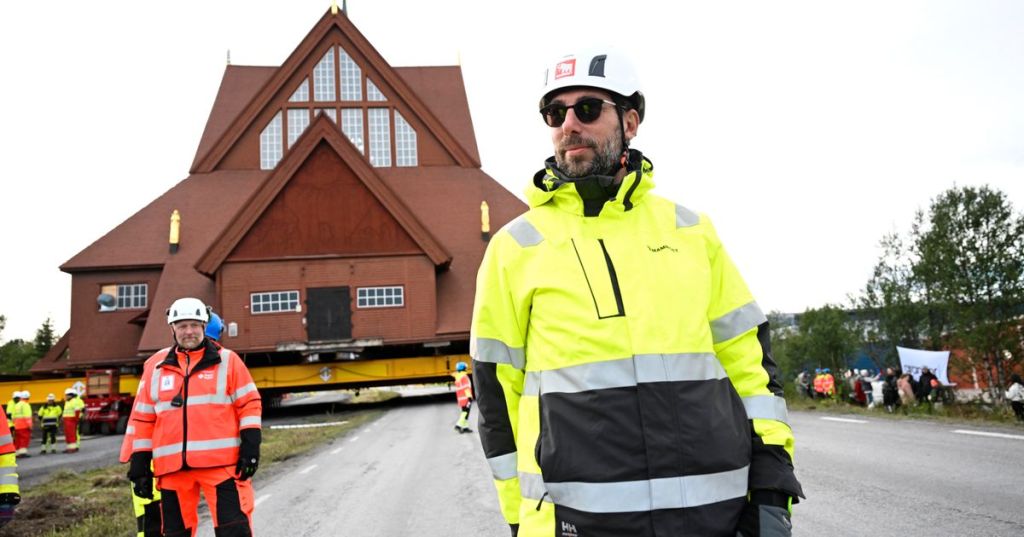
In an unprecedented engineering venture that has captured the attention of thousands, including the presence of Sweden’s King Carl XVI Gustaf, the historic Kiruna Church is being relocated 5 kilometers east of its original site. This move is a part of a broader initiative to save Kiruna’s old downtown, including its significant buildings, from the expanding underground iron ore mine threatening the town’s stability. The church, a neo-Gothic structure cherished for its architectural beauty and cultural importance, is expected to reopen at its new site by the end of next year. The relocation effort not only involves complex engineering feats, such as widening roads and dismantling a viaduct but also addresses the socio-cultural impacts on the local community. The project has received both praise for its ambitious scope and criticism due to concerns raised by the local Sami communities regarding the potential effects on reindeer migration and herding activities.
The relocation of Kiruna Church was highlighted in detail by Swedish newspapers SvD and GP. SvD’s article, penned by Marc Skogelin Tt, delves into the operation managed by the Dutch company Mammoet. The company, known for moving significant structures, faces unique challenges with the church’s relocation. ‘De flyttar Kiruna kyrka – flera ”spanare” på plats’ outlines the complex processes involved in such a task, according to Mammoet’s manager Davide Andreani. This isn’t the first time a religious building has been moved, but the project’s scale and the church’s significance make it a particularly complicated endeavor.
The article from GP, titled ‘Nu flyttas Kiruna kyrka,’ unfortunately, lacks detailed content for a comprehensive analysis. However, it signifies the ongoing interest and coverage the church’s relocation is garnering. The move of Kiruna Church is symbolic of the broader challenges and changes facing the town of Kiruna. As the town navigates the implications of mining on its landscape and community, the relocation of such a key landmark stands as a testament to the lengths being taken to preserve Kiruna’s cultural and historical identity amidst unprecedented environmental challenges.
 TheLittleTwentieth - Renowned Papers Edition, AI Infused