Local sources from Lebanon: DW, الجزيرة نت.
UK coverage: The Telegraph.
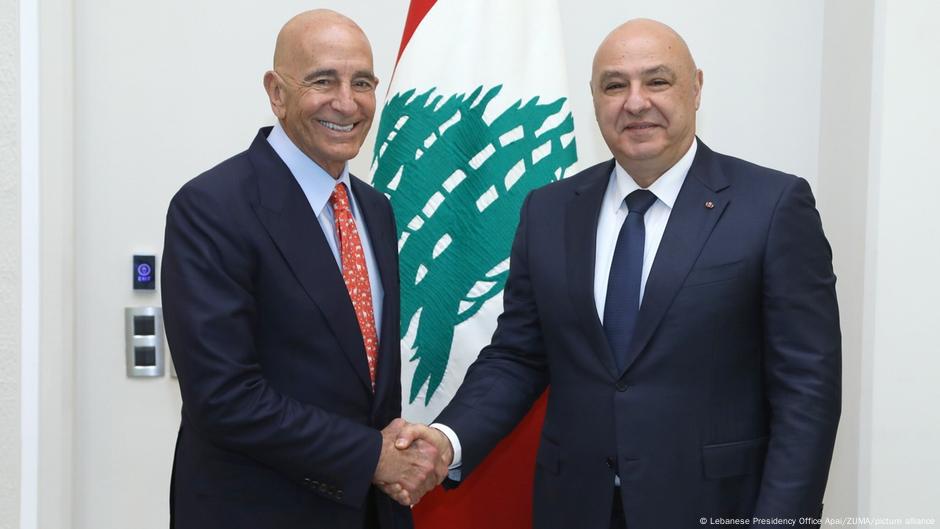
The recent escalation in Lebanon, following a 12-day war between Israel and Iran, has brought the disarmament of Hezbollah into sharp focus, presenting a complex challenge for Lebanon, Israel, and international mediators. Amidst the backdrop of Tehran’s weakened support for Hezbollah due to the closure of a key supply route through Syria, the Lebanese government is under pressure to navigate a US-proposed disarmament plan without igniting further conflict or internal strife. The situation is compounded by skepticism regarding Israel’s commitment to peace and Hezbollah’s insistence that its arms are essential for Lebanon’s defense against Israel. U.S. envoy Thomas Barrack’s recent statements underscore the fragile balancing act required to move forward. During his visit to Lebanon, Barrack emphasized that Israel’s cooperation is crucial following Lebanon’s agreement to pursue Hezbollah’s disarmament, a plan mediated by the United States in November. Despite Hezbollah’s outright rejection and the continuation of Israeli military strikes, the call for disarmament has garnered attention given the significant casualties and destruction wrought in South Lebanon by last year’s conflict. Lebanese President Joseph Aoun has appealed for international support to rebuild affected areas, highlighting the broader implications of disarmament beyond immediate security concerns. The Lebanese government’s stance, influenced by American pressure and the looming threat of an Israeli military campaign, reflects the complexities of disarming a group like Hezbollah, which remains the only faction with a military arsenal post-civil war. Hezbollah’s refusal to disarm, citing the need for Lebanon’s defense and demanding Israel’s withdrawal from seized territories, underscores the deep-seated tensions and the risk of spiraling into a civil war. Prime Minister Nawaf Salam’s criticism of Hezbollah’s position as a threat of civil conflict further illustrates the precarious situation. As international actors, including the United States, the European Union, and the United Kingdom, take a stance on Hezbollah’s disarmament, the path ahead remains fraught with challenges. The Lebanese government and its people stand at a crossroads, seeking to secure peace and stability while navigating the demands and threats posed by internal factions and external pressures.
 TheLittleTwentieth - Renowned Papers Edition, AI Infused