Local sources from Philippines: Lowy Institute, BBC.
UK coverage: Euronews.com.
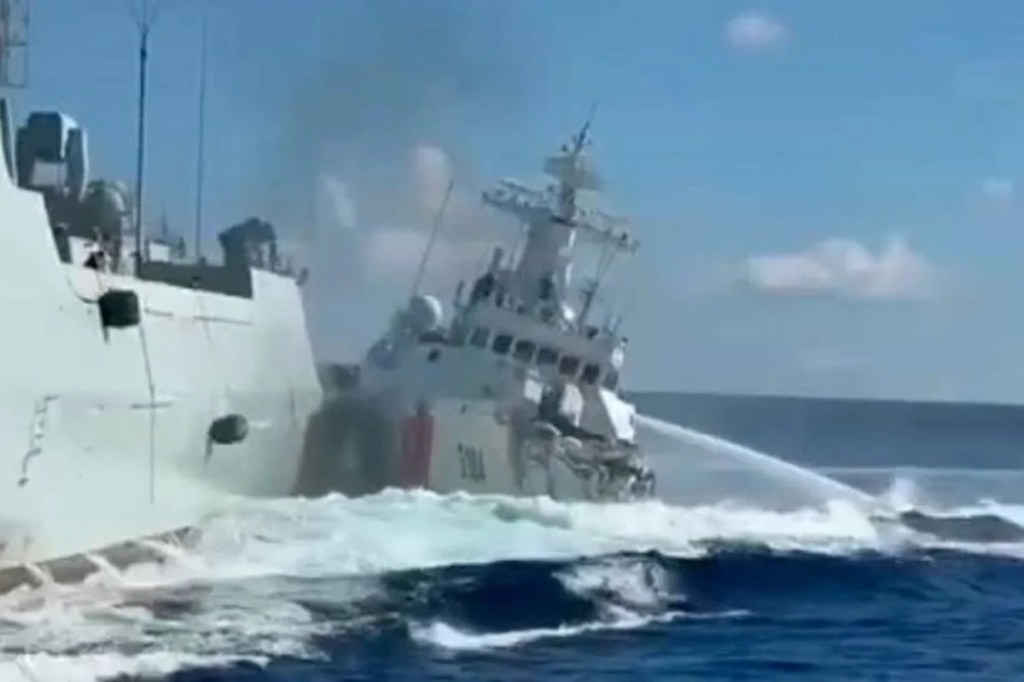
Tensions have once again flared in the South China Sea, this time spotlighting the strategic alliance between the United States and the Philippines following a concerning maritime incident. According to a detailed report from the Lowy Institute, a collision involving ships from the Chinese People’s Liberation Army Navy and the China Coast Guard, ostensibly harassing a Philippine Coast Guard vessel near the contested Scarborough Shoal, has reignited concerns over regional stability and sovereignty issues. This confrontation arises amidst Philippine President Ferdinand Marcos Jr.’s efforts to strengthen ties with Washington, a move that has yet to yield significant progress in defense or investment spheres. The United States has responded by deploying additional warships to the disputed waters, signaling a solid backing for the Philippines amidst escalating threats from Chinese maritime assertiveness. This latest episode in the South China Sea underscores a complex web of territorial claims, international legal disputes, and the broader geopolitical contest between major powers in a region crucial for global trade and security. The incident has put the Philippines’ reliance on American military support into sharp relief, especially in the face of China’s refusal to acknowledge the 2016 arbitration ruling under the United Nations Convention on the Law of the Sea (UNCLOS) that invalidated its expansive claims over the sea. Meanwhile, BBC’s Verify Team, headed by Anthony Reuben, has taken an interest in the maritime clash alongside other significant global events, including debunking a viral AI-generated video from Gaza and assessing UK policy considerations. This multi-faceted approach to covering international incidents highlights the increasing role of digital verification in journalism and the continuous interplay between regional disputes and global diplomatic engagements. As the world watches, the evolving dynamics of the US-Philippines alliance and China’s maritime ambitions remain central to understanding shifts in international relations and security strategies in the Asia-Pacific region.
 TheLittleTwentieth - Renowned Papers Edition, AI Infused