Local sources from India: आज तक, BBC.
UK coverage: BBC.
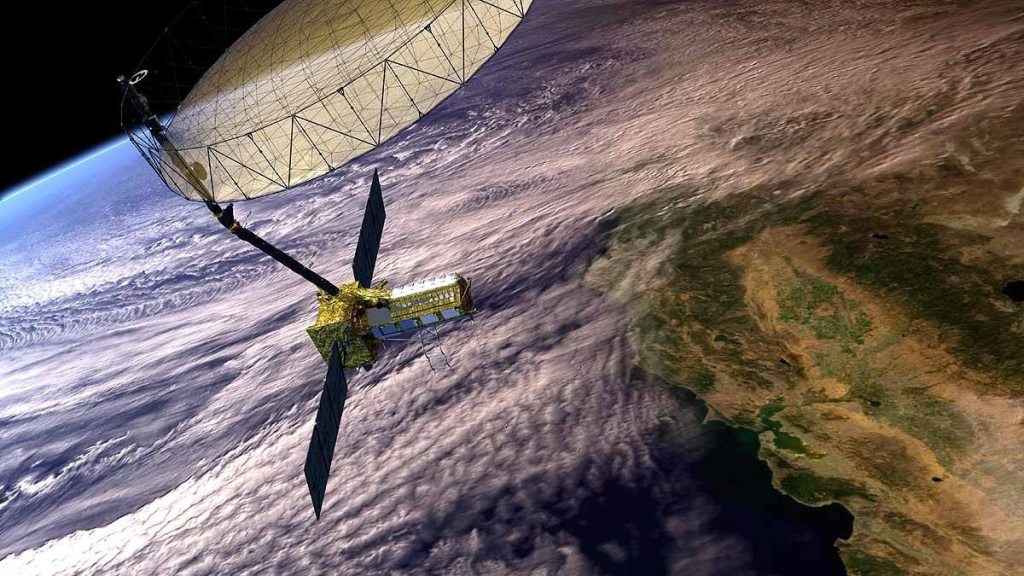
In an unprecedented move that underscores the power of international cooperation in space exploration and Earth observation, NASA and ISRO have joined forces to launch the NISAR satellite, an endeavor set to revolutionize our understanding of Earth’s surface dynamics. The NISAR (NASA-ISRO Synthetic Aperture Radar) satellite, often referred to as Earth’s ‘MRI scanner,’ is poised for launch on July 30, 2025, from the Satish Dhawan Space Centre in Sriharikota, marking a significant leap in our capabilities to predict and manage natural disasters and monitor the impacts of climate change with unmatched precision.
With an investment of approximately 13,000 crore rupees (around 1.5 billion dollars), this mission embodies the culmination of a decade-long scientific collaboration between India and the United States. By employing dual radar frequencies—the L-band from NASA and the S-band from ISRO—NISAR will scan the entirety of Earth’s surface every 12 days from a sun-synchronous orbit at an altitude of 747 km. This sophisticated radar system is designed to penetrate deep cover of forests, ice, and soil to detect minute changes at the centimeter level across land, ice, and coastal regions, thereby providing crucial data that can aid in predicting natural disasters such as earthquakes, tsunamis, volcanoes, landslides, and more.
The satellite, weighing approximately 2,392 kg, is not only a marvel of engineering with its 12-meter mesh antenna and power supplied by large solar panels but also represents a significant stride towards open science. The mission aims to offer free data to scientists, governments, and the public worldwide, enhancing global efforts in disaster management, climate change monitoring, water resource management, agriculture, and forestry.
This collaborative effort between NASA and ISRO underscores the global importance of understanding and protecting our planet. By providing detailed maps and recordings of geographical changes, ecosystem variations, sea level changes, and groundwater levels, NISAR positions itself as a key tool in the global fight against climate change and natural disasters. The launch of NISAR is not just a testament to what can be achieved when nations unite for a common scientific endeavor but also a hopeful promise of a better-prepared world for future generations.
 TheLittleTwentieth - Renowned Papers Edition, AI Infused