Local sources from United States: USA Today, CNN.
UK coverage: UNILAD.
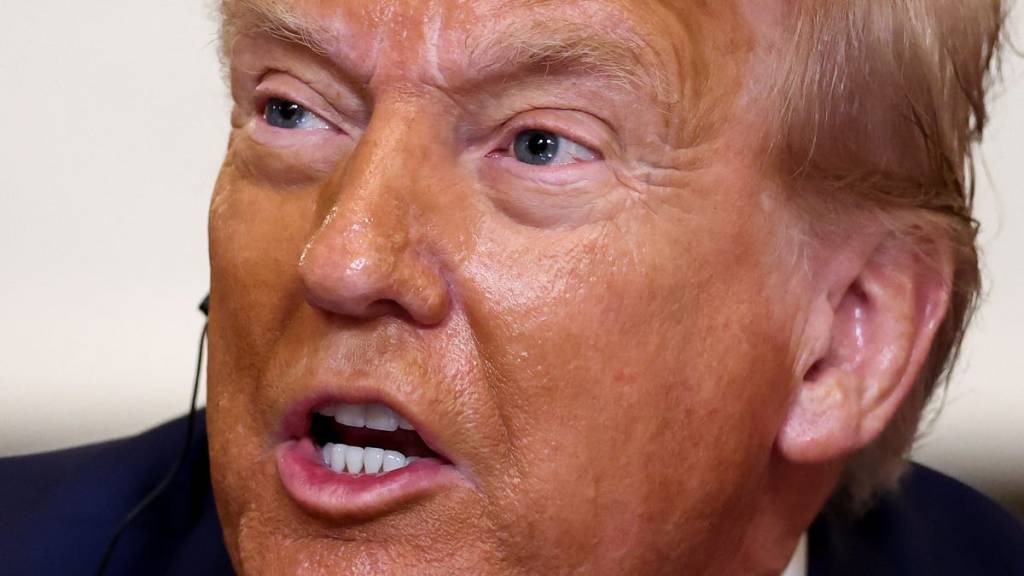
In a startling revelation that has sent shockwaves through international diplomatic circles, former President Donald Trump is reported to have threatened to ‘bomb the s*** out of Moscow’ amid escalating tensions between Russia and Ukraine. This aggressive posture was disclosed in leaked audio from a fundraising dinner, where Trump also expressed his frustration with Russian President Vladimir Putin’s actions regarding Ukraine. The leaked content has sparked a fierce debate over the implications of such threats on global peace and the United States’ foreign policy stance. The audio, which was first brought to public attention by CNN, has been corroborated by details published in USA Today, painting a comprehensive picture of Trump’s aggressive rhetoric and his proposed strategies to end the conflict in Ukraine. According to reports, Trump boasted of his ability to conclude the war within 24 hours should he be re-elected, a claim that remains speculative against the backdrop of ongoing hostilities with no immediate resolution in sight. In a pivot towards a more tangible military support for Ukraine, Trump announced plans to dispatch Patriot defense systems to the war-torn country, a move that signifies a significant escalation in U.S. involvement in the conflict. This decision comes on the heels of Trump’s bombastic threats, highlighting a complex strategy of deterrence and direct military aid in response to Russian aggression. The deployment of these advanced defense systems, valued at $1 billion per battery, represents a substantial investment by the U.S. and its NATO allies in the defense of Ukraine, signaling a robust commitment to countering Russian military maneuvers. Beyond the immediate context of the Russia-Ukraine conflict, Trump’s statements at the fundraising events shed light on his broader foreign policy outlook and campaign strategy leading up to the 2024 presidential election. The former president did not limit his threats to Russia but extended a similar warning to China concerning Taiwan, underscoring his willingness to employ aggressive military rhetoric in dealing with global adversaries. Additionally, Trump’s remarks included a controversial proposal to deport student protesters as a measure to quell pro-Palestinian demonstrations on college campuses, further illustrating his combative approach to both international diplomacy and domestic policy. As the world grapples with the repercussions of these developments, questions abound regarding the effectiveness of such threats in achieving lasting peace and the potential consequences of escalating military involvement in global conflicts. Trump’s assertions and the subsequent decision to enhance Ukraine’s defense capabilities mark a critical juncture in the international community’s efforts to navigate the complex dynamics of the Russia-Ukraine war and the broader geopolitical landscape.
 TheLittleTwentieth - Renowned Papers Edition, AI Infused