Local sources from India: The Economic Times, BBC.
UK coverage: BBC.
In a significant move that has captured the attention of the global community, the Dalai Lama, Tibet’s exiled spiritual leader, has unveiled plans for his succession, marking a pivotal moment in the centuries-old institution of Tibetan Buddhism. Living in India since fleeing Tibet in 1959, following a failed uprising against Chinese rule, the Dalai Lama has been a symbol of peace, spiritual guidance, and the Tibetan struggle for autonomy. His announcement comes at a time when the debate around his succession has intensified, given the geopolitical tensions between China and Tibet.
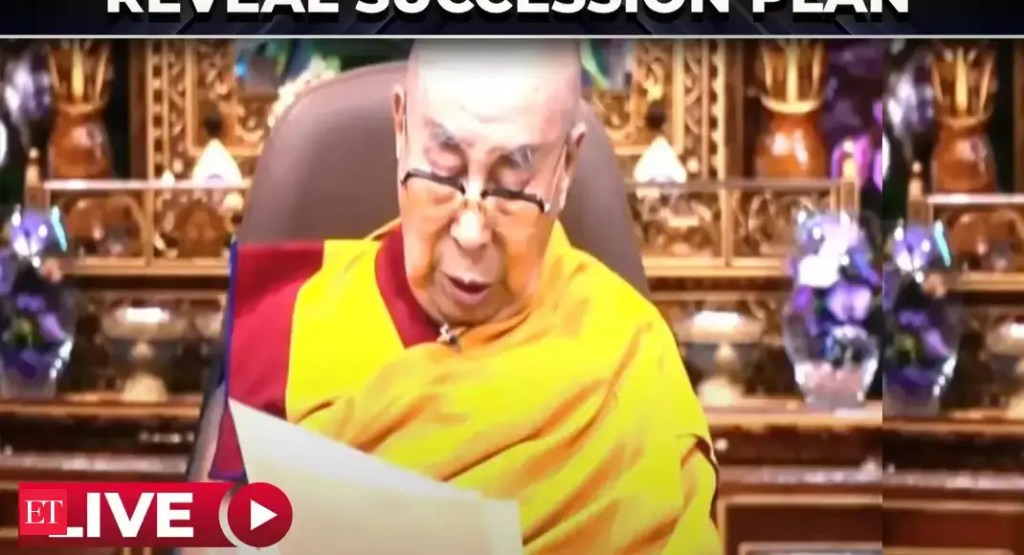
During a three-day meeting with Tibetan Buddhist leaders, broadcasted via video, the Dalai Lama disclosed his intention to continue the traditional method of selecting his successor, firmly excluding external interference, notably from China. This announcement, coinciding with his 90th birthday celebrations in Dharamshala, was attended by a diverse audience, including Indian dignitaries and international figures such as Hollywood actor Richard Gere.
The Dalai Lama’s explicit declaration that his successor will be born outside of China underscores his commitment to the ‘middle way’ approach—seeking genuine autonomy for Tibet within China, rather than outright independence. This stance, however, is in direct opposition to Beijing’s view of the Dalai Lama as a separatist figure. The issue of succession is not merely a religious or cultural matter but is also heavily laden with political implications, particularly concerning China’s influence in the region and its claim over Tibet.
Experts and members of the Tibetan community have expressed concerns over China’s potential move to appoint its own Dalai Lama, a move that would likely be rejected by Tibetans and the international community alike, undermining the legitimacy of the institution. The continuation of the Dalai Lama lineage is seen as crucial not only for maintaining Tibetan Buddhism’s spiritual integrity but also for upholding Tibetan national identity and the ongoing struggle for autonomy.
As the world watches closely, the Dalai Lama’s succession plan represents a defiant assertion of Tibetan sovereignty over spiritual affairs and a beacon of hope for Tibetans in exile and those under Chinese governance in Tibet. While the path ahead is fraught with challenges, the clarity and determination of the Dalai Lama’s announcement are a bold affirmation of Tibetan resilience and the enduring legacy of its spiritual leadership.
 TheLittleTwentieth - Renowned Papers Edition, AI Infused