Local sources from United States: The Guardian, AP News.
UK coverage: Reuters.
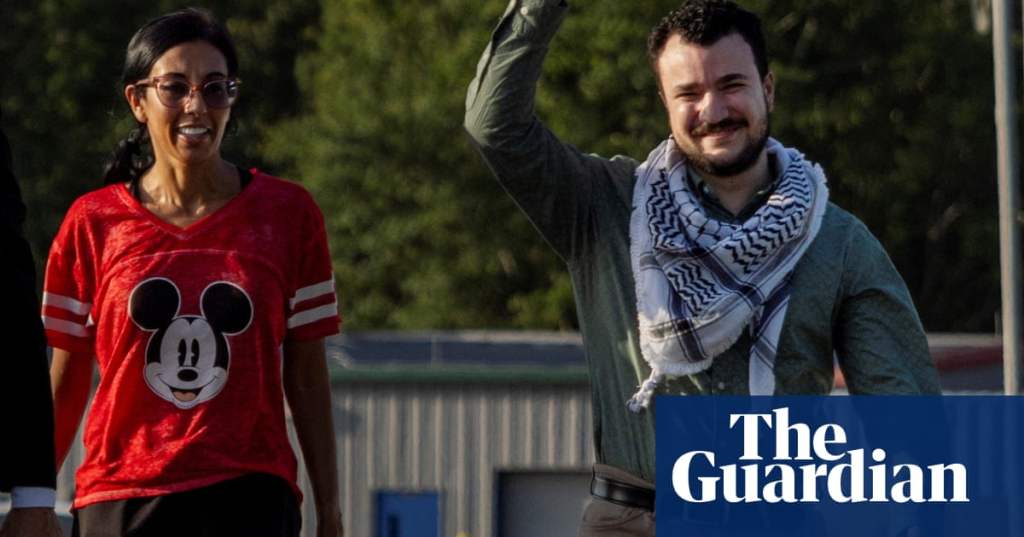
In a significant development that has captured national attention, Mahmoud Khalil, a renowned pro-Palestinian activist and graduate student at Columbia University, has been released from a notorious immigration detention center in Louisiana after more than three months of confinement. Khalil’s detention, which ended following a federal judge’s order, had been a focal point in the ongoing debate over immigration policies and the limits of free speech under the Trump administration.
Khalil, detained over his activism against Israel’s actions in Gaza, became a symbol of what critics describe as the administration’s broader effort to quash pro-Palestinian voices on U.S. campuses. Despite the government’s attempts to justify his detention on grounds of national security, accusations of antisemitism, and alleged pro-Hamas advocacy, the judge found Khalil to be neither a flight risk nor a danger to the community, leading to his conditional release.
His case, which has sparked controversy and discussions on free speech and immigration policy, involves a rarely used immigration provision challenged as likely unconstitutional. As part of his release conditions, Khalil was ordered to surrender his passport and green card, highlighting the precarious situation faced by international activists in the U.S. Despite his freedom, the Department of Homeland Security announced intentions to appeal the judge’s decision, emphasizing ongoing efforts to deport Khalil based on accusations related to his green card application.
For Khalil, who is married to a U.S. citizen and has a newborn son whom he has yet to hold in private, the release marks a bittersweet moment. While expressing relief at being reunited with his family, he condemned the injustice of his prolonged detention and voiced concerns for the remaining detainees. Khalil’s case has attracted significant attention, shedding light on the broader crackdown on student activism and raising critical questions about the intersection of immigration policy, free speech, and the conflation of criticism of Israel with antisemitism.
As this story unfolds, it serves as a poignant reminder of the ongoing debates that define America’s political and social landscape, particularly regarding human rights and the values the country purports to uphold.
 TheLittleTwentieth - Renowned Papers Edition, AI Infused