Local sources from Spain: El Mundo, The New York Times.
UK coverage: The Guardian.
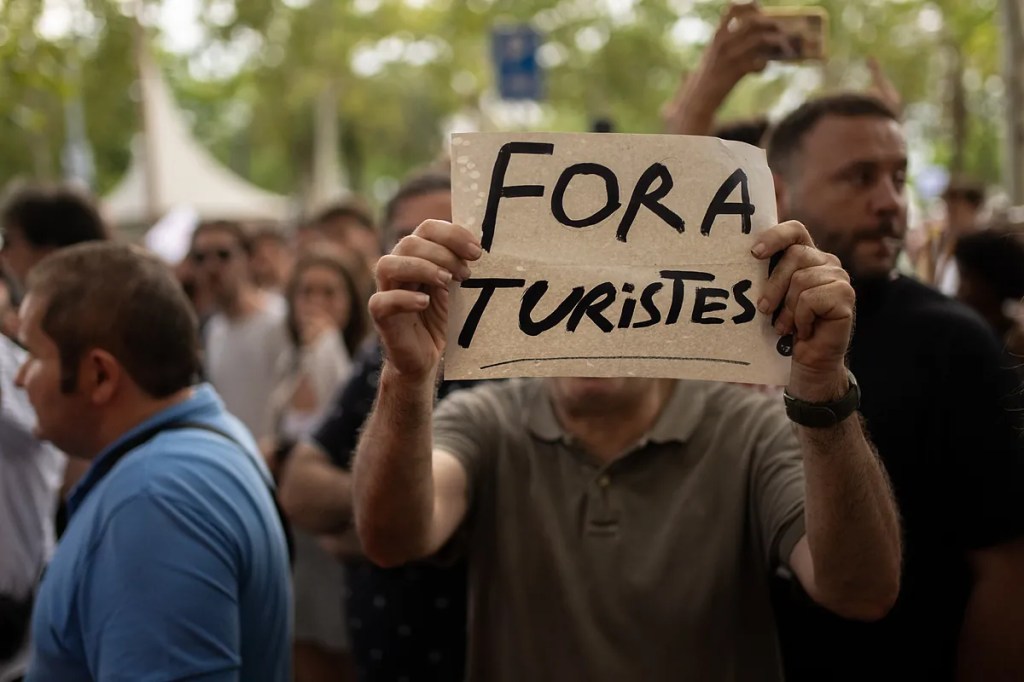
In a significant display of discontent, thousands have taken to the streets across several cities in southern Europe, voicing their concerns over the growing trend of ‘touristification’ that is reshaping their communities. From the vibrant alleys of Barcelona to the historic sites of Lisbon and the scenic coasts of Genoa, protestors united under a common cause: the call for a sustainable approach to tourism that prioritizes the needs and welfare of local residents over the interests of the tourism industry. This wave of protests underscores a critical conversation about the balance between welcoming visitors and preserving the essence of local cultures and communities. In Barcelona, the Assembly of Neighborhoods for Touristic Degrowth led a spirited demonstration, where activists wielded water guns and chanted slogans to highlight their plight. The protest, attracting around 600 participants including workers from various sectors and political figures, put a spotlight on issues such as housing speculation driven by tourism, the proposed expansion of Barcelona-El Prat Airport, and the overall decline in the quality of life for the city’s residents. Similar sentiments were echoed in cities like Palma de Mallorca, Genoa, and Lisbon, where demonstrators emphasized the adverse effects of tourism on housing prices, local culture, and the environment. The coordinated protests are part of a larger movement that originated from a workshop held in Barcelona in April, which saw the participation of activists from France, Portugal, Italy, and various parts of Spain. Daniel Pardo, a spokesperson for the Network of Southern European Cities against Touristification, articulated the movement’s objective to curtail the influx of tourists and advocate for a tourism model that is both sustainable and equitable. As these cities grapple with the challenges posed by mass tourism, the protests serve as a poignant reminder of the need for dialogue and action towards reconciling the interests of tourists with those of local communities. The movement also seeks to dispel misconceptions, clarifying that their opposition is not towards tourists per se, but against the systemic issues perpetuated by unchecked tourism.
 TheLittleTwentieth - Renowned Papers Edition, AI Infused