Local sources from United States: BBC, CNN.
UK coverage: Financial Times.
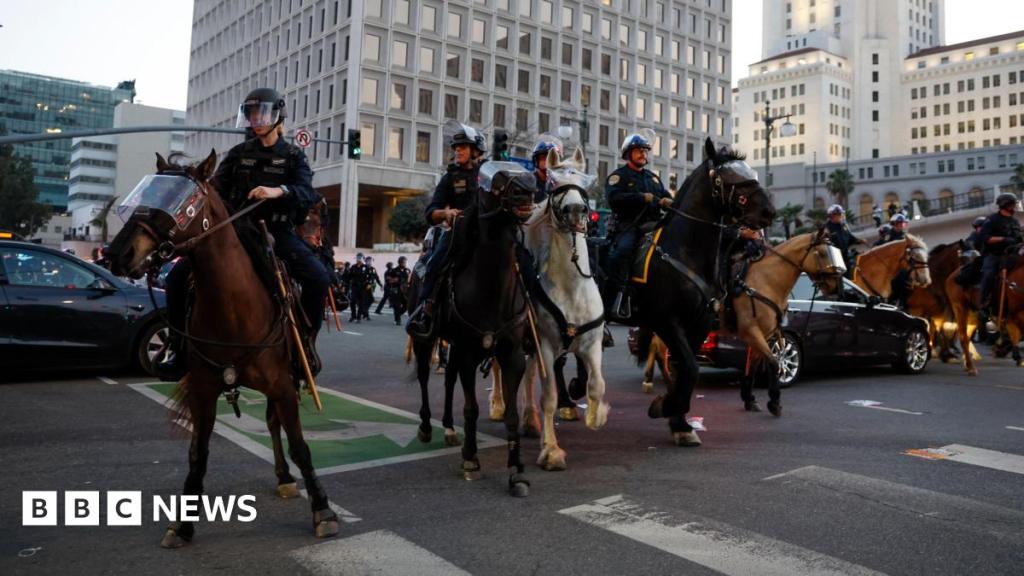
In a recent surge of protests across the United States, sparked by the Trump administration’s immigration enforcement actions, responses from local and state governments have varied significantly, highlighting a nation deeply divided on the issue of immigration policy and law enforcement. Amidst the unfolding events, the city of Los Angeles has become a focal point of demonstrations against Immigration and Customs Enforcement (ICE) raids, leading Mayor Karen Bass to impose a curfew in parts of downtown LA from 8 p.m. to 6 a.m. local time. This measure aims to quell the protests that have escalated into mass arrests following the curfew’s enforcement, with almost 200 individuals detained in a single day, according to a report by CNN. The curfew, a bid to maintain order and public safety, underscores the challenges cities face in managing large-scale demonstrations while respecting citizens’ rights to protest. Meanwhile, Texas has opted for a markedly different approach in anticipation of similar protests. Governor Greg Abbott has ordered the state’s National Guard to be on standby, a move reported by the BBC, reflecting a stronger inclination towards law enforcement and public order. This preemptive measure by Governor Abbott comes amidst concerns that protests, particularly in Democratic-majority cities like San Antonio, could escalate into violence, posing a significant challenge to the Republican governor’s law and order stance. The situation in Texas, contrasted with California’s approach to handling the protests, exemplifies the political and ideological divides influencing the responses to these nationwide demonstrations. Moreover, a federal judge’s recent denial of California’s request to temporarily restrain the Trump administration from deploying the Marines and the National Guard for law enforcement purposes further complicates the dynamic between federal authority and state autonomy. This denial also led to the activation of about 700 Marines to protect federal personnel and property, a significant escalation in the government’s response to the protests. As the United States grapples with these protests, the divergent strategies of Los Angeles and Texas highlight the broader national debate over immigration policy, law enforcement, and the right to peaceful assembly. The coming days are likely to see continued demonstrations and possibly further governmental measures as officials at both state and local levels navigate the complex landscape of political dissent, public safety, and civil liberties.
 TheLittleTwentieth - Renowned Papers Edition, AI Infused