Local sources from United States: The Guardian, BBC.
UK coverage: BBC.
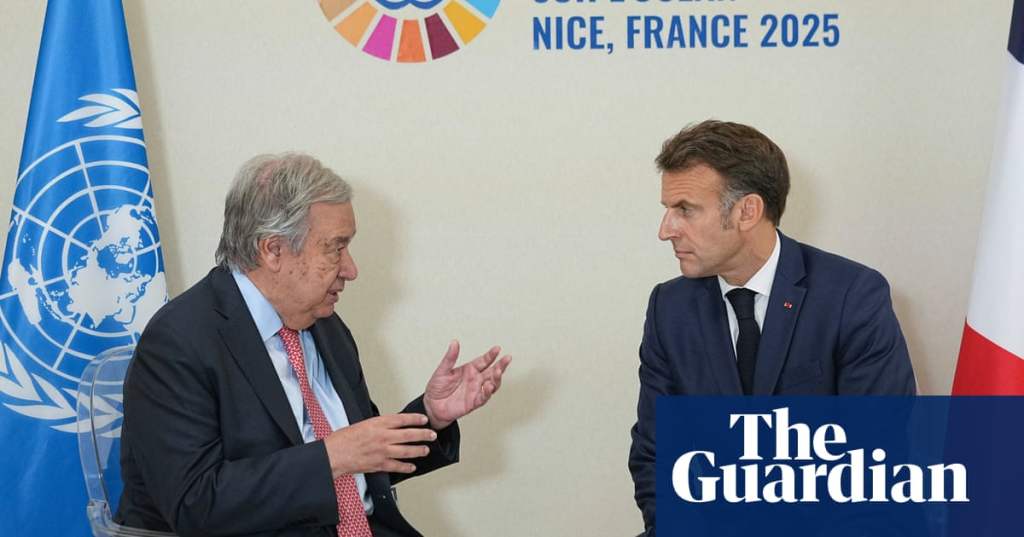
At the recent UN Oceans Conference held in Nice, France, both UN Secretary-General António Guterres and French President Emmanuel Macron voiced strong concerns over the unregulated mining and exploitation of the world’s oceans, setting a tone of urgency in addressing what many see as the next frontier in environmental protection. Guterres made a compelling comparison, warning against transforming our oceans into a ‘Wild West’ of unchecked industrial activity. His call to action was underscored by Macron’s assertion that the oceans are not commodities to be sold, highlighting a shared vision for a future where oceanic preservation is prioritized over exploitation. This stance comes in stark contrast to moves made by former US President Donald Trump, who, in April, signaled a shift towards facilitating critical mineral extraction in international waters, sparking a global dialogue on the governance and protection of marine resources. The conference was not just a platform for high-level declarations but also served as a critical juncture for laying out actionable steps towards ocean conservation. Guterres’s call for a shift from ‘plunder to protection’ encapsulates the message of the summit, urging nations towards bold initiatives that aim to protect at least 30% of the ocean by 2030. These initiatives are set against the backdrop of increasing threats such as plastic pollution, overfishing, and the potentially devastating impacts of deep-sea mining. Macron’s advocacy for a moratorium on deep-sea mining further emphasizes the need for a collective halt to the rush towards exploiting these uncharted territories. The summit also highlighted the high seas treaty, a pivotal piece of international legislation that aims to establish a global mining code and safeguard oceanic biodiversity. Yet, the path forward is not without its challenges. The treaty still lacks the necessary ratifications to come into force, a hurdle that underscores the need for increased multilateral cooperation and action. Moreover, the conference showcased diverging views on practices such as bottom trawling, illustrating the nuanced debate over sustainable fisheries management and conservation strategies. As the world stands at a crossroads in its relationship with the oceans, the calls for action at the UN Oceans Conference underscore an emerging consensus on the need for a comprehensive and unified approach to ocean governance. With the health of the world’s oceans hanging in the balance, the international community faces a critical test of its capacity to forge a sustainable path forward, ensuring that these vital ecosystems are preserved for future generations.
 TheLittleTwentieth - Renowned Papers Edition, AI Infused