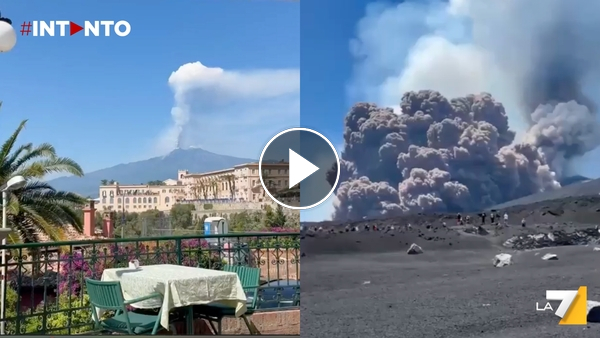
Local sources from Italy: LA7, Tgcom24.
UK coverage: European Space Agency.
Mount Etna, Europe’s highest active volcano, erupted on June 2, 2025, marking its most significant activity since 2014. The eruption forced tourists in Sicily, Italy, to evacuate, as captured by the Copernicus Sentinel-2 mission. The eruption generated a colossal plume of ash, gas, and volcanic material, leading to a partial collapse of the volcano’s northern flank, as reported by Italy’s National Institute of Geophysics and Volcanology Observatory. Satellite imagery from the Sentinel-2 and Sentinel-5P missions provided dramatic visuals of the eruptive phenomena, including the extensive lava flow, clouds of smoke and ash, as well as emissions of sulphur dioxide into the atmosphere. According to an article from LA7, the eruption initiated overnight at the Southeast Crater, with a notable increase in volcanic tremor, an indicator of the volcano’s heightened activity. The most dramatic incident occurred in the morning when a large section of the crater’s northern flank gave way, resulting in a ‘collapse of material.’ This landslide set off a considerable flow of volcanic debris, visible from extensive distances. The INGV (National Institute of Geophysics and Volcanology), which has been closely monitoring the situation, highlighted that Etna has undergone periods of intense activity in February and April, pointing to a prolonged phase of instability. Meanwhile, Tgcom24 offered a visual perspective with ‘Catania, the images of the eruption of Etna,’ underscoring the widespread interest and concern over this natural disaster. The eruption of Mount Etna stands as a stark reminder of the powerful and unpredictable nature of Earth’s geologic forces, drawing global attention to the ongoing monitoring and study of volcanic activity.
 TheLittleTwentieth - Renowned Papers Edition, AI Infused