Local sources from France: France Info, France 24.
UK coverage: Euronews.com.
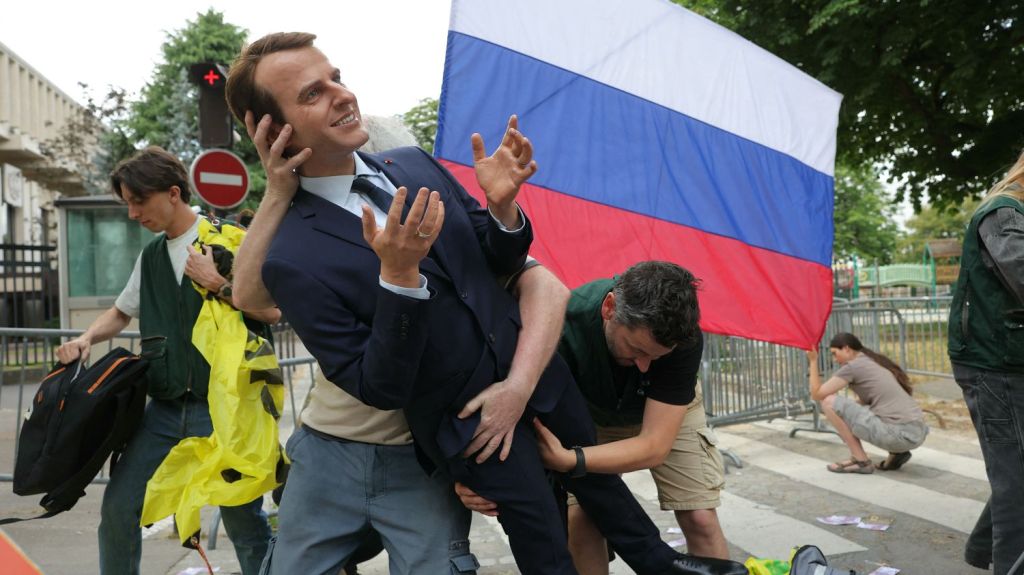
In an unprecedented series of events that captured both public curiosity and international media attention, activists purporting to belong to the environmental group Greenpeace executed a daring theft, followed by a symbolic protest, to voice their concerns over France’s economic engagements with Russia. The Grévin Museum in Paris, known for its collection of wax figures depicting famous personalities, became the stage for this unusual demonstration when the wax statue of French President Emmanuel Macron was stolen only to be strategically placed at prominent locations in Paris as a bold statement against Franco-Russian relations.
The saga began on June 2, when the wax effigy of President Macron disappeared from the Grévin Museum. According to France Info, the theft was meticulously planned by individuals who initially visited the museum as tourists. Disguising themselves as employees, they managed to smuggle the statue, valued at approximately 40,000 euros, out of the premises using an emergency exit and a blanket to conceal their unusual cargo. Shortly thereafter, the statue was found positioned in front of the Russian embassy in Paris, an act that Greenpeace France claimed responsibility for, articulating their protest against what they see as President Macron’s hypocritical stance. By supporting Ukraine amidst the ongoing conflict while allowing French companies to maintain trade relations with Russia, Greenpeace accuses Macron of double standards.
The narrative took another twist on June 3, when France 24 reported that the stolen statue was relocated once again by Greenpeace activists, this time in front of the headquarters of Electricité de France (EDF), one of the country’s main energy companies. Accompanied by a sign declaring ‘Poutine-Macron, radioactive allies’, the protest underscored Greenpeace’s concerns over France’s importation of Russian products, including enriched uranium for nuclear power plants and natural gas. This act was not just a protest against the economic ties but also highlighted the environmental and ethical implications of relying on such energy resources amid geopolitical tensions.
These dramatic events have rekindled debates around environmental activism, the boundaries of protest, and the complex web of international relations. As the Paris prosecutor’s office undertakes an investigation into the theft, the broader conversation about France’s energy policies and its diplomatic stance towards Russia has been thrust into the limelight, raising pivotal questions about the balance between political pragmatism and environmental ethics. Greenpeace’s actions, while controversial, have undeniably succeeded in sparking a dialogue on these critical issues, reflecting the growing importance of environmental concerns in the realm of global politics.
 TheLittleTwentieth - Renowned Papers Edition, AI Infused