Local sources from United States: CNN, CNBC.
UK coverage: politico.eu.
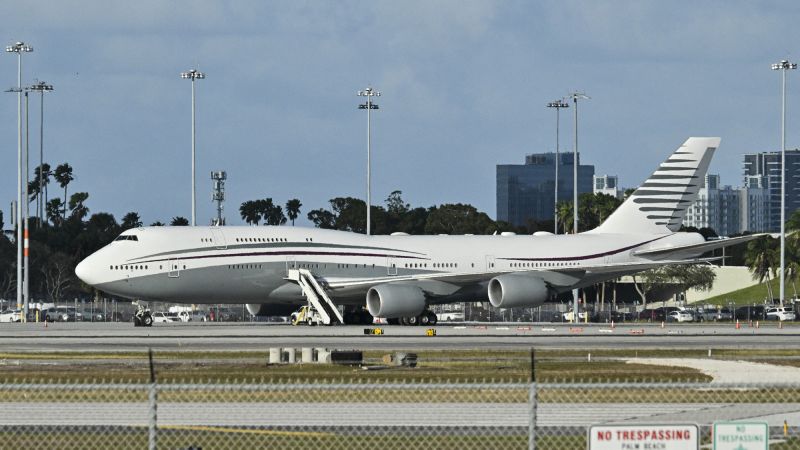
In a developing story that has sparked bipartisan concerns, Qatari Prime Minister Sheikh Mohammed bin Abdulrahman Al-Thani has come forward to defend the donation of a Boeing 747 plane to the Trump administration, amidst swirling accusations of bribery and debates over the ethics and legality of such a gift. The Prime Minister insists that the transaction was a transparent and legal exchange between allies, aiming to assist the U.S. in replacing its aging Air Force One fleet. This defense comes in the wake of criticism from both Democrats and some Republicans, who argue the donation breaches ethical standards and possibly U.S. law.
Recent reports have highlighted conflicting narratives regarding the origin of the plane’s offer. Contrary to President Trump’s claims that Qatar proposed the Boeing 747 as a ‘gift,’ investigations by CNN have revealed that it was, in fact, the Trump administration who initiated discussions about acquiring the plane, initially exploring options to purchase or lease before the donation idea surfaced. This revelation adds a layer of complexity to the ethical and legal scrutiny surrounding the transaction, emphasizing the potential for conflicts of interest and violations of the U.S. Constitution’s Foreign Emoluments Clause.
Meanwhile, CNBC reports provide insight from Qatar’s Prime Minister, who vehemently denies allegations that the plane’s offer was an attempt at bribery to curry favor with the Trump White House. Highlighting the transaction’s legal framing and the longstanding military cooperation between Qatar and the U.S., Sheikh Mohammed bin Abdulrahman al-Thani frames the donation within the context of a broader defense agreement, which includes Qatar’s commitment to purchase up to 210 Boeing aircraft—an arrangement celebrated by the White House as a landmark deal for Boeing.
Despite these assurances, the potential use of the plane—requiring significant modifications for presidential duties and Trump’s intention to donate the jet to his presidential library post-term—continues to raise questions. With the new Air Force One planes now expected in 2027 due to delays at Boeing, the debate over the Qatari jet’s donation underscores ongoing concerns about the intersection of international diplomacy, domestic politics, and ethical governance. As the situation unfolds, it remains to be seen how this controversy will impact U.S.-Qatari relations and the broader discourse on foreign gifts to U.S. officials.
 TheLittleTwentieth - Renowned Papers Edition, AI Infused