Local sources from India: Dainik Bhaskar, aajtak.in.
UK coverage: Al Jazeera.
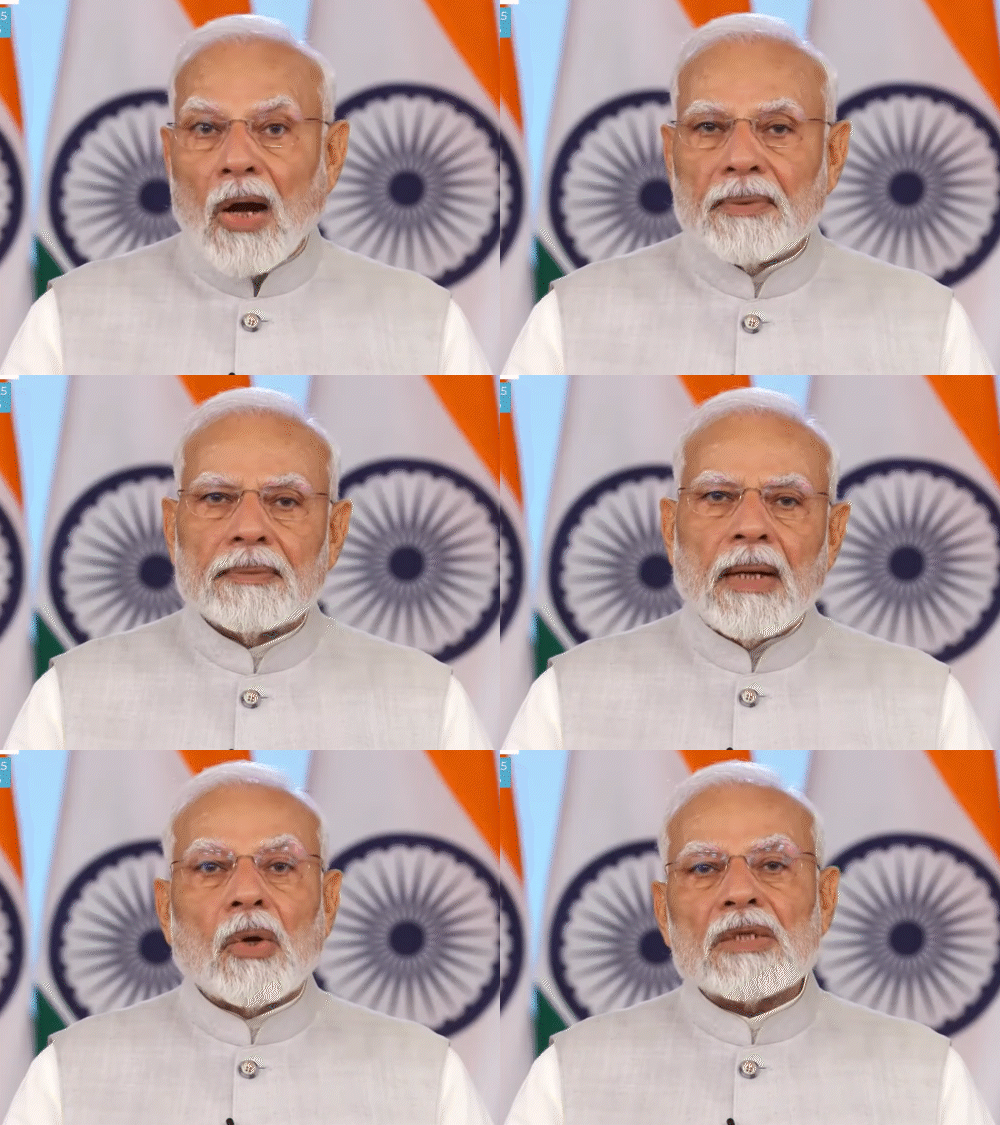
In a series of compelling addresses to the nation, Indian Prime Minister Narendra Modi has unequivocally stated that India’s recent military action against Pakistan is merely ‘paused’ and not concluded, setting a stern tone against further acts of ‘terror.’ Amidst the backdrop of a recent military skirmish between the two nuclear-armed neighbors, Modi’s speeches have sent a clear message of retaliation against any future provocations. This stance comes in the wake of a ceasefire that has momentarily diffused what could have escalated into a full-blown conflict, the fifth of its kind, between India and Pakistan. Modi criticized Pakistan’s aggression and its alleged involvement in terrorism, particularly highlighting the deadly attack in Kashmir that preceded this standoff. The United States’ intervention in brokering a ceasefire has been acknowledged, with claims that it prevented a potential nuclear conflict. High-ranking officials from both countries are now poised to delve into the ceasefire’s technicalities to avoid future escalations, as tensions simmer with both nations claiming victory in the recent confrontation. Modi’s address emphasized ‘Operation Sindoor,’ a military response to terrorism that resulted in the elimination of over 100 terrorists, according to the Prime Minister. This operation, named to signify the protection of Indian women’s honor, has been highlighted as a pivotal moment in India’s fight against terrorism. Modi’s rhetoric has been particularly poignant, drawing upon the symbolic ‘Sindoor’ to drive home the consequences faced by those who harbor intentions to harm India. With an eye on future diplomacy, Modi has announced a significant shift in India’s water management strategy concerning Pakistan, hinting at leveraging the Indus Waters Treaty amidst these heightened tensions. This move signifies a broader approach to counter-terrorism, stretching beyond military measures to include strategic economic and environmental dimensions. Furthermore, Modi’s discourse has firmly placed terrorism and the contentious issue of Pakistan-Occupied Kashmir (PoK) at the center of any future dialogue with Pakistan, effectively sidelining other bilateral concerns until these pressing issues are addressed. The Prime Minister’s messages underscore a zero-tolerance policy towards terrorism, emphasizing that peace talks and terror activities cannot coexist. This narrative not only redefines India’s stance on national security but also sends a clear warning to Pakistan and its alleged state-sponsored terrorism. The international community’s role in recognizing and reacting to these developments remains critical, as India asserts its right to self-defense in the quest for peace and prosperity in the region.
 TheLittleTwentieth - Renowned Papers Edition, AI Infused