Local sources from Senegal: CNN, The Associated Press.
UK coverage: The Guardian.
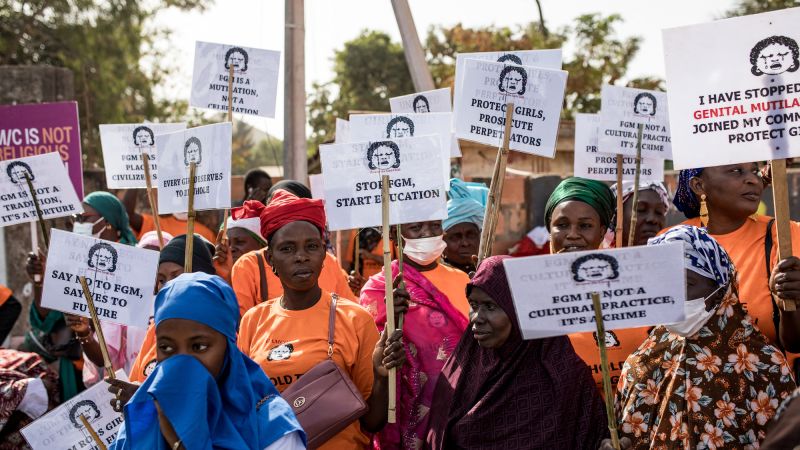
In a significant victory for campaigners, lawmakers in the Gambia voted to uphold the ban on female genital mutilation (FGM). Out of the 53 lawmakers, 34 voted to maintain the ban, while the rest voted to repeal it. The Gambia has the ninth-highest rate of FGM in the world, with nearly three-quarters of Gambian women between 15 and 49 having undergone the practice. While the decision is celebrated, human rights campaigners emphasize the need for further efforts to improve the lives of women and girls in the country.
Gambia’s parliament has voted to uphold a landmark law that bans female genital mutilation (FGM) in the largely Muslim nation, after religious groups pushed for the legislation to be repealed. If Monday’s bid had been successful, the tiny West African country would have been the first in the world to relegalize FGM after criminalizing it. FGM was prohibited in Gambia in 2015 by former president Yahya Jammeh who authorized the imposition of fines and prison sentences of up to three years for individuals who engaged in it. The law also punished perpetrators with life sentences in cases where the practice led to death. Pro-Islamic groups and lawmakers pushed back against the criminalization, saying that female circumcision was ‘one of the virtues of Islam.’ Human rights organization Amnesty International earlier described efforts to revoke the FGM ban as a ‘backward move’ for the protection of human rights in the country. In Gambia, 73% of women aged between 15 and 49 years had experienced FGM as of 2020, according to the United Nations. Despite the ban, FGM has still been performed on children in parts of the country. Last year, three women were convicted of performing the practice on eight female minors and ordered to pay fines of around 15,000 Gambian Dalasi ($220) each or face a one-year jail sentence. Gambia’s Islamic body in 2023 issued a fatwa, recommending the lifting of the ban of what they defined as ‘female circumcision,’ as opposed to female genital mutilation or cutting. UNICEF and WHO issued a joint statement on Monday evening, commending Gambia on the vote which reaffirmed ‘its commitments to human rights, gender equality, and protecting the health and well-being of girls and women.’
 TheLittleTwentieth - Renowned Papers Edition, AI Infused