Local sources from Hungary: Telex, hvg.hu.
UK coverage: The Telegraph.
Hungary’s Prime Minister, Viktor Orban, has caused controversy within the EU by planning a trip to meet Russian President Vladimir Putin in Moscow. This move has raised concerns among European diplomats due to its timing, as Orban has recently assumed the rotating presidency of the EU. The EU has made it clear that discussions about Ukraine cannot take place without involving Ukraine, as Russia is seen as the aggressor and Ukraine as the victim. Orban and Putin have a close relationship, having met twice since Russia’s invasion of Ukraine in 2022.
According to an article from Telex titled ‘VSquare: Orbán Visits Moscow After Kiev,’ journalist Szabolcs Panyi reports that Orban is embarking on another trip to meet Putin in Moscow, just a few days after his visit to Kiev to meet with the Ukrainian president. The article mentions that Foreign Minister Péter Szijjártó will also accompany Orban on this trip. The timing of this visit is significant as Hungary has recently taken over the rotating presidency of the European Union Council. The article speculates whether Orban mentioned this upcoming trip to Putin during his negotiations with the Ukrainian president.
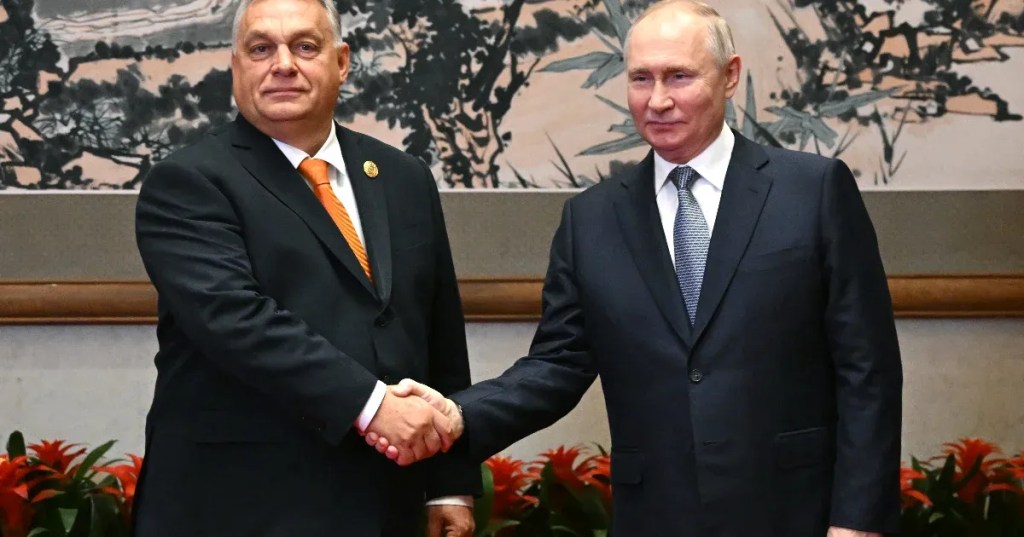
The Telex article also highlights the previous meeting between Orban and Putin in Beijing last October, where Orbán traveled as the only EU politician to attend the ‘One Belt, One Road’ forum. The article suggests that Orbán’s use of diplomatic language during the public part of the meeting indicated his acknowledgment of the damage caused by Russia’s actions in Ukraine. However, in a TikTok video, Orbán referred to the conflict as a ‘war’ and expressed his goal of maintaining Hungarian-Russian cooperation in energy and economic issues despite the ongoing conflict.
An article from hvg.hu titled ‘World: Orbán in Moscow: Peace-making or trolling during the visit?’ discusses the implications of Orban’s visit to Moscow. The article notes that government officials have not confirmed the visit, and instead, they only mention Orbán’s participation in the Turkic Council meeting in Azerbaijan. The EU leaders have been reluctant to engage with Orbán due to his previous support for Russia’s aggression against Ukraine. Orbán’s last visit to Putin in Moscow was just before the Russian invasion of Ukraine.
The hvg.hu article raises questions about the purpose of Orbán’s visit to Moscow. It suggests that Orbán’s views on peace differ from those of other EU member states, as he supports ceasing financial and military support to Ukraine and starting ‘peace talks’ between the parties. However, Moscow’s intentions are not to negotiate peace but rather complete capitulation from Ukraine. The article emphasizes that Orbán does not have the mandate to negotiate with Putin on behalf of the EU and that his visit undermines the interests of the Union.
The article speculates on Orbán’s motives for the visit, suggesting that it may be a form of trolling or an attempt to divert attention from other issues. It also raises the possibility that Orbán is going ‘all-in’ and hopes to play the role of a ‘great peacemaker’ in the future. However, the article concludes that true peace is unlikely to be achieved without Ukraine accepting the loss of its territory and Moscow’s interests being fulfilled.
In summary, Hungary’s Prime Minister Viktor Orban’s planned trip to Moscow has sparked controversy within the EU. The timing of the visit, as Orban assumes the rotating presidency of the EU, has raised concerns among European diplomats. While Orban and Putin have a close relationship, the EU has made it clear that discussions about Ukraine must involve Ukraine itself. The purpose and implications of Orban’s visit to Moscow remain uncertain, but it is clear that his actions have drawn criticism from EU politicians who argue that he does not have the mandate to negotiate on behalf of the Union.
 TheLittleTwentieth - Renowned Papers Edition, AI Infused