Local sources from United States: The New York Times, National Review.
UK coverage: BBC.
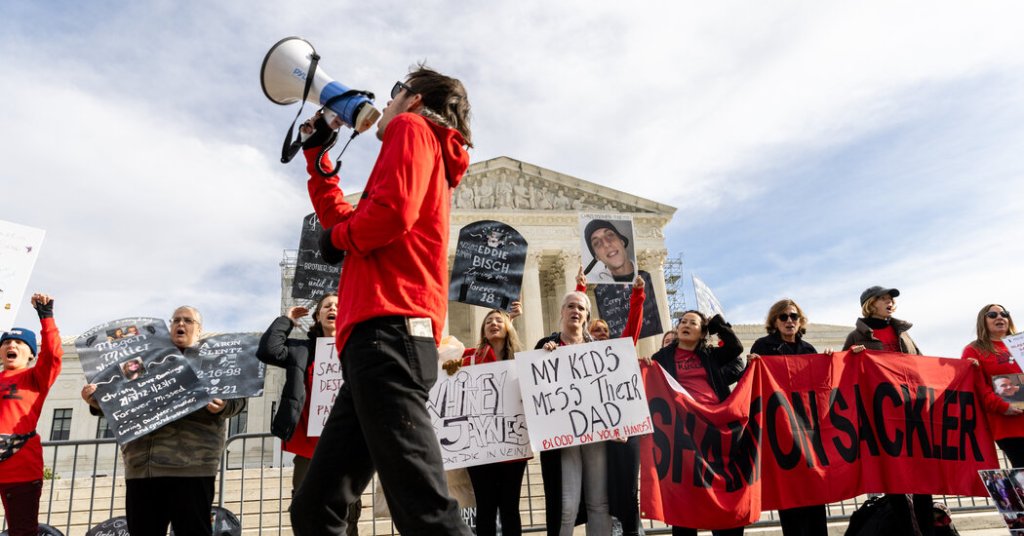
In a landmark decision, the US Supreme Court has rejected a crucial part of the bankruptcy deal for Purdue Pharma, the manufacturer of Oxycontin, that would have shielded the Sackler family from future lawsuits related to the devastating opioid crisis. The Sacklers, who owned the company, had agreed to pay $6 billion towards a broader settlement in exchange for immunity from civil claims. However, the court ruled that granting such protections to the Sacklers, who did not declare bankruptcy themselves, was not authorized under the law. This ruling is seen as a significant victory for the US government and others who argued that releasing the Sacklers from liability was an abuse of the system.
The Supreme Court’s decision, delivered in a 5-to-4 vote, jeopardizes the carefully negotiated bankruptcy plan that aimed to address the opioid crisis by channeling billions of dollars towards its resolution. The plan, which involved states, tribes, local governments, and individuals, had offered broad protections demanded by the Sackler family, who controlled Purdue Pharma, even though they had not filed for bankruptcy themselves.
Justice Neil M. Gorsuch, in his opinion joined by Justices Clarence Thomas, Samuel A. Alito Jr., Amy Coney Barrett, and Ketanji Brown Jackson, wrote, ‘The Sacklers have not filed for bankruptcy and have not placed virtually all their assets on the table for distribution to creditors, yet they seek what essentially amounts to a discharge.’ This ruling signifies a clear departure from the Sacklers’ attempt to secure immunity from lawsuits without the consent of those who might sue.
The rejection of the proposed settlement by the Supreme Court is a significant blow to the Sackler family, who have long faced scrutiny for their alleged role in fueling the opioid crisis. Purdue Pharma, the pharmaceutical company responsible for manufacturing the highly addictive painkiller OxyContin, has faced numerous lawsuits accusing it of aggressively marketing the drug while downplaying its risks.
Under the terms of the rejected settlement, the Sackler family would have paid $4.5 billion and relinquished control of Purdue Pharma. However, the court’s decision means that the settlement will not proceed in its current form, leaving the Sacklers vulnerable to additional lawsuits and legal challenges related to their involvement in the opioid crisis.
Critics of the proposed settlement argue that it fails to hold the Sackler family personally accountable for their actions. They believe that the family should bear responsibility for the harm caused by Purdue Pharma’s aggressive marketing practices. The Supreme Court’s rejection of the settlement is seen as a victory for those seeking justice and accountability in the face of the devastating opioid crisis.
The rejection of the Purdue Pharma settlement serves as a reminder that the consequences of the crisis extend far beyond financial settlements. It highlights the ongoing efforts to hold pharmaceutical companies and their owners accountable for their role in fueling the epidemic that has claimed millions of lives to addiction and overdose.
As the Sackler family now faces the prospect of further legal battles, the Supreme Court’s decision sends a clear message that accountability and justice must be prioritized in addressing the opioid epidemic. It underscores the need for a comprehensive approach to combat addiction and provide support to the communities affected by this crisis.
 TheLittleTwentieth - Renowned Papers Edition, AI Infused