Local sources from Argentina: ámbito.com, BBC.com.
UK coverage: Financial Times.
Bolivia, a country with a turbulent history of political instability and numerous coup attempts, has recently witnessed a remarkable change in its political landscape. Former President Evo Morales was forced to resign amid allegations of electoral fraud, but instead of a military coup, the country experienced a peaceful transition of power. This significant development highlights a shift towards democratic norms and institutions in Latin America.
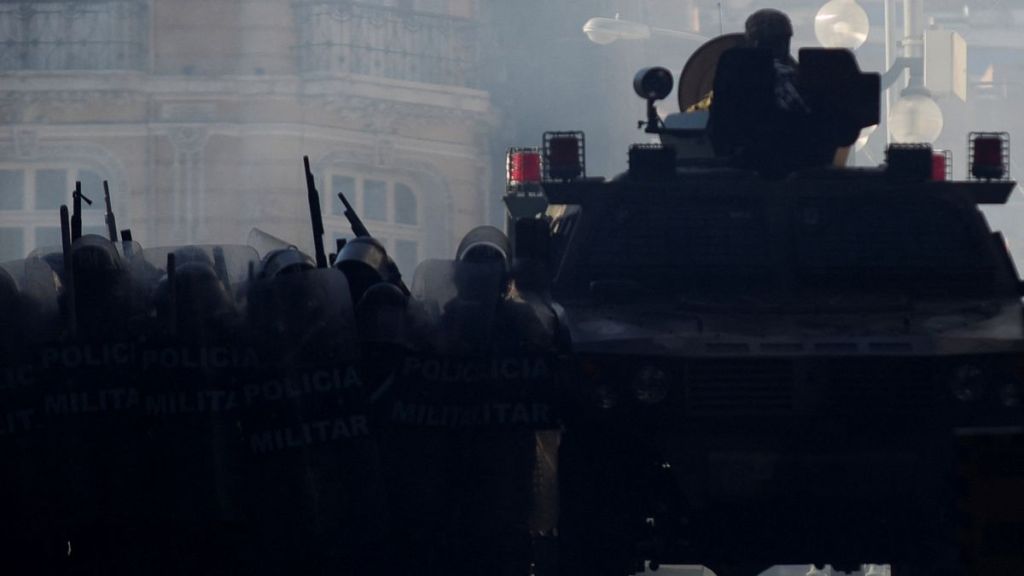
In a breaking news story reported by ámbito.com, President Luis Arce took swift action to address the attempted coup by dismissing the top military brass and ordering the troops to demobilize. The military personnel and armored vehicles that had advanced towards the presidential palace in La Paz began to withdraw. This decisive move by President Arce, coupled with the condemnation of the attack on democratic stability by the country’s highest court of justice, demonstrates the commitment to upholding democratic principles.
The ámbito.com article also highlights the role of social media in mobilizing support for democracy. Both President Arce and former President Morales used their social media platforms to call for a national mobilization in defense of democracy. Morales denounced the coup orchestrated by General Juan José Zuñiga and called for an indefinite general strike and roadblocks. These actions reflect the determination of the people to protect democracy and resist any violation of their rights.
BBC.com provides a historical perspective on Bolivia’s tumultuous past. The country has had a long history of political turbulence, with an average of a new government every 26 and a half months since its independence in 1825. Bolivia holds the record for the most coup attempts in the world between 1950 and the present. However, experts express surprise at the recent events in Bolivia, considering the country’s transition to democracy in 1982 and the consolidation of anti-coup norms in Latin America.
The BBC.com article also sheds light on the internal factors that have contributed to Bolivia’s history of coups. The absence of a solid institutional framework and a poorly professional army prone to adventurous actions have played a significant role. However, the series of coups ended with the constitutional government of Hernán Siles Suazo in 1982, marking the beginning of a long period of democracy in Bolivia.
The recent attempted coup in Bolivia has surprised many observers. The country seemed to have overcome the electoral turmoil of 2019-20 and had been a democracy since 1982. The accusation of an attempted coup made by President Arce against General Zuñiga has raised questions about the government’s stability. While some experts consider it a weak government attempting a self-coup, others attribute the crisis to the internal struggle within the ruling Movement Towards Socialism (MAS).
Despite the challenges and internal conflicts, Bolivia’s peaceful transition of power signifies a positive shift towards democratic norms and institutions in Latin America. The events in Bolivia serve as a reminder that political polarization and social unrest continue to shape the region’s political landscape. As the country moves forward, it will be crucial to address these challenges and foster a more inclusive and stable democracy.
 TheLittleTwentieth - Renowned Papers Edition, AI Infused