Local sources from Greece: The New York Times, Daily Mail.
UK coverage: Daily Mail.
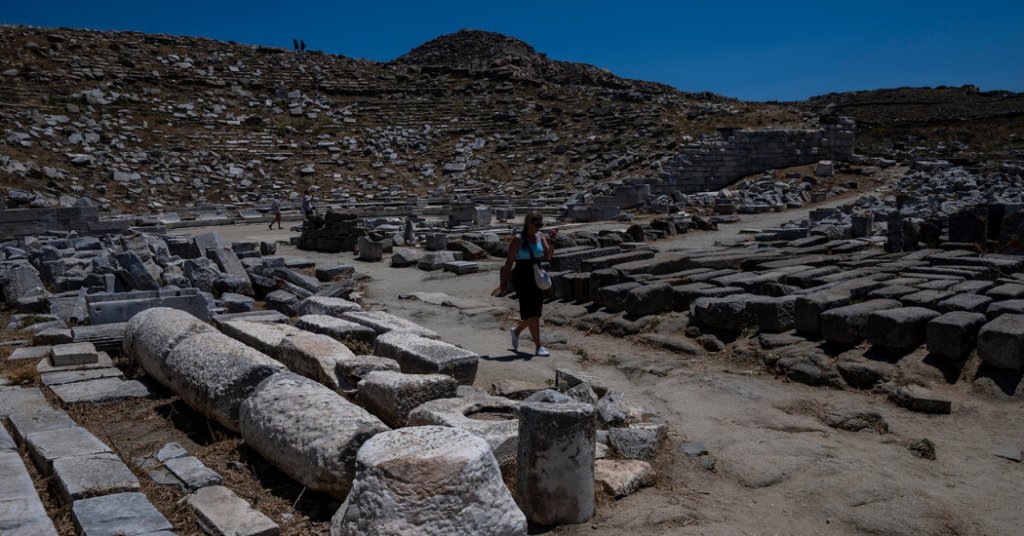
A heatwave has engulfed Europe, bringing scorching temperatures and devastating consequences. In Cyprus, two people have tragically lost their lives due to heat-related causes. An 84-year-old woman died a day after being admitted to the hospital, while a 91-year-old woman passed away at Nicosia General Hospital. Three elderly patients are in serious condition, and five other tourists remain missing across Greece. Fires have also ravaged parts of Cyprus, making firefighting efforts challenging. The situation is not limited to Cyprus alone, as Southern Europe grapples with record-breaking temperatures. Meanwhile, Britain experiences unseasonably low temperatures and heavy rain. The Copernicus Climate Change Service predicts that the Mediterranean will continue to face extreme heat in the coming months. Heatwaves in Europe are becoming longer, and last year was the warmest on record. The severity of the heatwave has led to the closure of the Parthenon in Greece, with the Red Cross distributing bottled water to tourists. Schools have also been instructed to close, and wildfires have consumed vast areas of forest and farmland. The situation is not isolated to Greece, as France, Turkey, and Spain have also been affected. Climate change is believed to be a contributing factor to the intensification of heatwaves, with heatwave-linked deaths in Europe increasing by 30% over the past two decades. While Europe grapples with scorching temperatures, Britain experiences the opposite with colder temperatures and heavy rain. The polar front jet stream is responsible for this contrast, keeping colder air in Britain. However, meteorologists predict a potential heatwave in Britain in the coming weeks. The effects of climate change are evident, with extreme weather events becoming more frequent and severe across the globe.
 TheLittleTwentieth - Renowned Papers Edition, AI Infused