Local sources from Hungary: Portfolio, Híradó.
UK coverage: The Telegraph.
Hungary has negotiated a deal with NATO that exempts them from providing military aid or personnel to support Ukraine. In exchange, Hungary will not veto any NATO plans to support Ukraine, despite their criticism of the war and soft stance on Russia. The deal allows NATO to raise and coordinate €40 billion in annual military support for Ukraine through their planned ‘Mission for Ukraine’ scheme. The scheme will give NATO control of the Ramstein group and enable them to manage deliveries of lethal aid to Ukraine.
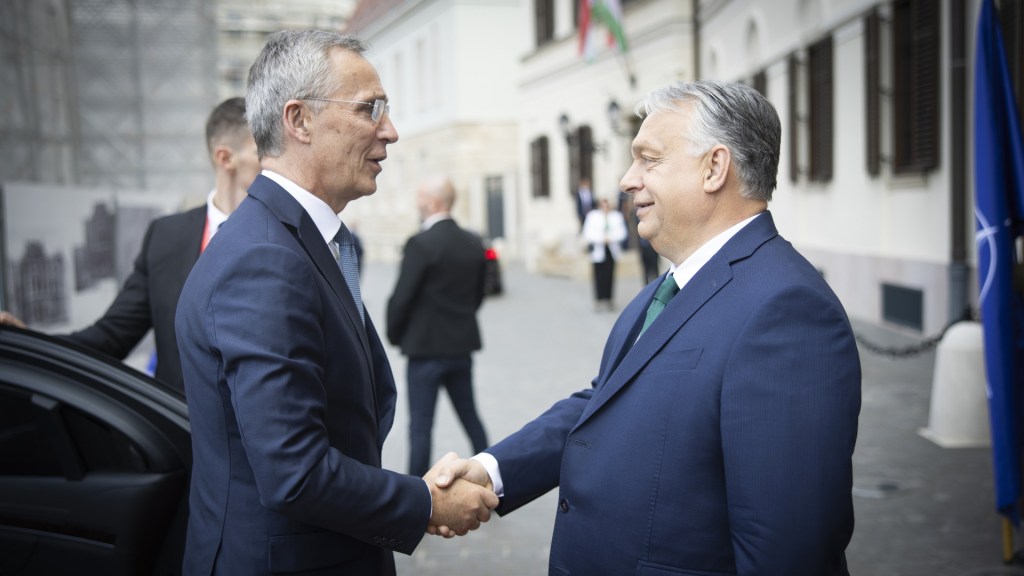
After a meeting with NATO Secretary General Jens Stoltenberg, Hungarian Prime Minister Viktor Orbán stated that Hungary does not intend to block decisions that differ from their own stance on Ukraine. Orbán emphasized that Hungary recognizes the significant number and weight of differing opinions within NATO and does not have the capability to change them. However, Hungary will not resist NATO’s initiatives and will fulfill all its NATO commitments.
Stoltenberg praised Hungary as a loyal and committed NATO ally, highlighting their contributions to NATO operations and support for stability in the Balkans and Ukraine. He confirmed that Hungary will not participate in NATO’s efforts to support Ukraine, and the country’s personnel and financial resources will not be used for this purpose.
During the meeting, Stoltenberg expressed his hope for an agreement at the upcoming summit in Washington, where NATO will take a leading role in coordinating and facilitating security assistance and training for Ukraine. He emphasized the importance of providing predictability and long-term support to Ukraine, stating that it would contribute to achieving peace in the region.
The NATO Secretary-General also welcomed the agreement reached at the G7 summit to provide Ukraine with a $50 billion loan from frozen Russian assets. He proposed a financial agreement within NATO that meets Ukrainian military needs, with a value of at least €40 billion annually.
In Brussels, Stoltenberg emphasized the need for immediate and long-term support for Ukraine, as the delay in financial and military assistance has serious negative consequences on the battlefield. He urged member states to maintain their level of contribution and guarantee at least €40 billion of annual support for Ukraine.
NATO defense ministers are expected to approve the establishment of a new training facility for Ukrainian soldiers in Poland. The coordination of Ukraine’s military support will be led by the Informal Ukraine Defense Liaison Group, with NATO playing a greater role in these efforts.
In addition to the NATO support, the Dutch Ministry of Defense announced the provision of ammunition and financial contributions for the production of infantry fighting vehicles for Ukraine.
As the situation in Ukraine continues to evolve, Hungary’s agreement with NATO allows for increased military support for Ukraine while respecting Hungary’s differing stance on the conflict.
 TheLittleTwentieth - Renowned Papers Edition, AI Infused