Local sources from Argentina: CNN en Español, La Tercera.
UK coverage: The Guardian.
Buenos Aires, Argentina – Violent protests erupted in Buenos Aires as Argentina’s Senate narrowly approved the first set of austerity measures proposed by President Javier Milei. The measures, aimed at cutting spending and deregulating the economy, have been met with resistance from unions and opposition lawmakers. The approval of the bills is seen as a crucial test for Milei’s administration.
The clashes unfolded outside the Argentine Congress as senators debated the Bases and Starting Points Law for the Freedom of Argentinians, a key project for President Milei’s government. The law, which includes state reforms and various deregulations, was approved in general terms by a vote of 36 in favor and 36 against, with Vice President Victoria Villarruel casting the tie-breaking vote.
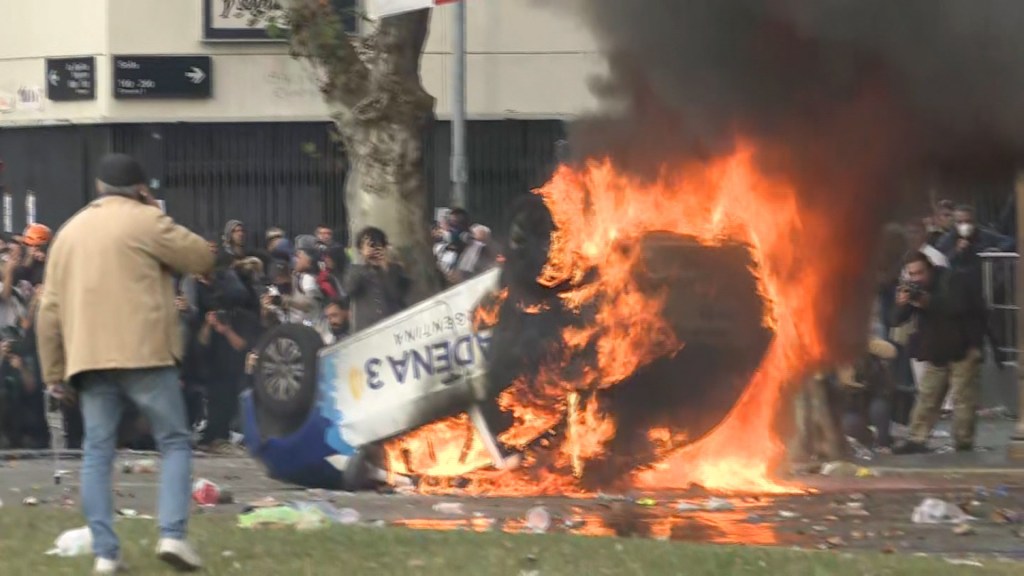
However, the day of debate in the chamber was marred by violence and clashes. Protesters threw stones, sticks, and bottles, while the police responded with tear gas and water cannons. Several explosions were heard in the area as tensions escalated. A radio station vehicle was overturned and set on fire, and a total of 18 people were arrested, with three police officers injured.
President Milei praised the police operation to confront the protests, stating, ‘Today, as a society, as a country, and as political leaders, we are at a crossroads: either we persist on the path of decline or we dare to embark on the path of freedom.’
The Bases Law, also known as Milei’s ‘star reform,’ includes various modifications and measures, such as declaring a ‘public emergency in administrative, economic, financial, and energy matters for a period of one year.’ This would grant the Executive Branch powers to legislate without going through Congress. The legislation has generated controversy and opposition among labor unions.
With the approval of the Bases Law, President Milei is one step closer to achieving his first major reform. However, the ruling party must now ensure that the Senate votes on the individual articles, some of which are at risk of being dropped. Amendments to the project include the inclusion of cultural organizations in the list of entities that Milei is prohibited from dissolving, and the removal of certain state-owned companies from the privatization annex.
As Argentina grapples with these austerity measures and economic reforms, the country remains divided, with unions and opposition lawmakers expressing their resistance. The approval of the bills marks a crucial test for Milei’s administration, as it strives to implement its vision for a deregulated economy and navigate the challenges of governing as a minority party in Congress.
 TheLittleTwentieth - Renowned Papers Edition, AI Infused