Local sources from India: The Independent, BBC.com.
UK coverage: The Guardian.
In a surprising turn of events, Narendra Modi’s majority in parliament has been lost, potentially signaling a new era for India’s oligarch class. The close ties between Modi and wealthy industrialists, such as Mukesh Ambani and Gautam Adani, have sparked discontent among the population, leading to protests and burning effigies becoming common sights. The inequality perpetuated by Modi’s favored tycoons has contributed to the erosion of his support, with India becoming more unequal under his rule than during British rule. As a result, Modi will now have to govern in coalition, potentially shifting the state’s favor towards different cronies.
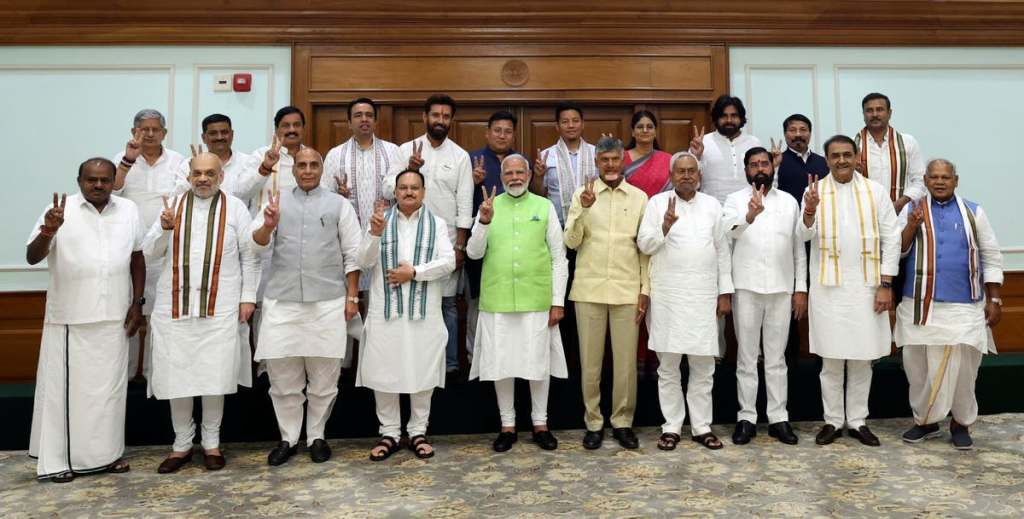
Modi’s claim to form a new Indian government has been set out as coalition talks continue to drag on. While his Bharatiya Janata Party (BJP) fell short of the majority mark, winning only 240 seats, the National Democratic Alliance (NDA) coalition, of which Modi is the leader, won a total of 293 seats. This victory puts Modi on track for a rare third term as prime minister, making him only the second person, after India’s independence hero Jawaharlal Nehru, to achieve this feat.
Despite the BJP’s reliance on smaller allies to form a government, Modi downplayed the significance of this development. However, analysts suggest that this could have significant implications for his ability to pass major policies in the future. The presidential palace is expected to host up to 8,000 people for Modi’s oath-taking ceremony, which will take place on Sunday. Invitations have been extended to foreign heads of state, as well as prominent figures from various fields.
Meanwhile, Rahul Gandhi, the leader of the opposition Congress party, has accused Modi of being involved in a stock market scam. Gandhi has demanded an investigation into a stock market crash that occurred after the general election results were announced. He claimed that top BJP leaders made misleading predictions about stock prices surging after June 4, causing people to buy stocks and subsequently lose money when the market crashed. Gandhi has called for a Joint Parliamentary Committee (JPC) to investigate the alleged scam and the role of Modi and senior ministers. He labeled it as the biggest scam in India’s stock market history, alleging that certain dubious foreign investors benefited from the manipulation, resulting in Indian citizens losing trillions of rupees.
Modi’s departing trade minister, Piyush Goyal, has denied the allegations and accused Gandhi of misleading investors. The markets crashed to a four-year low after Modi’s party lost its outright majority. As the coalition talks continue and Modi prepares to take office for his third term, the future of India’s oligarch class remains uncertain, with the population demanding more equitable governance.
 TheLittleTwentieth - Renowned Papers Edition, AI Infused