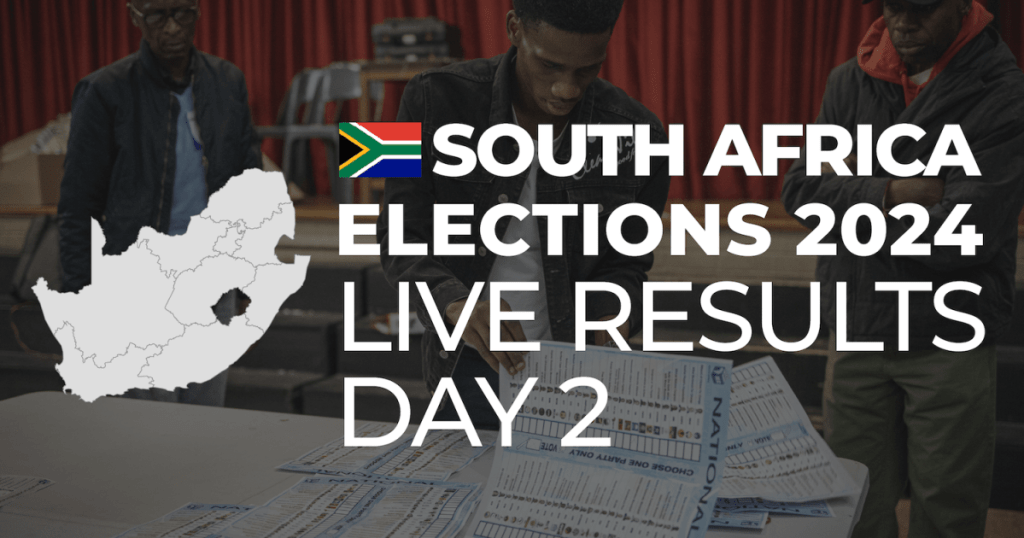
Local sources from South Africa: Al Jazeera English, BBC.com.
UK coverage: Financial Times.
The recent election in South Africa has left the ruling African National Congress (ANC) in a weakened position. The party received its lowest share of the vote since the end of apartheid, winning just 57.5% of the vote. This has put the ANC in a difficult position as they will have to form a coalition government in order to maintain control. The election also saw the rise of smaller parties, such as the Economic Freedom Fighters (EFF), who gained support from young voters disillusioned with the ANC’s record on corruption and economic inequality. The outcome of the election reflects a growing discontent among South African voters and a desire for change.
According to Al Jazeera English, with more than 90 percent of votes counted, the ruling ANC is leading with just over 40 percent share of the national vote. The Democratic Alliance (DA) is currently in second place followed by the MK party and EFF. If the ANC does not receive more than 50 percent of the vote, it will need to make a deal with other parties to form a coalition government. The choice of coalition partner will depend on the support needed to cross the 50 percent mark. The ANC has won all national elections since the end of apartheid in 1994, but in the last election in 2019, the ANC achieved its lowest margin of victory, winning 57.5 percent of the vote.
BBC.com reports that with most of the results now in, the ANC will have to contend with sharing power after a historic loss of its parliamentary majority. The ANC’s share of the vote currently stands at 40.25 percent. Support for the party has been dropping significantly due to anger over high levels of corruption, unemployment, and crime. The ANC will need to form a coalition with one or more other parties to hold on to power. ANC chairperson Gwede Mantashe said his party was unlikely to form an alliance with the center-right DA, which is currently polling in second place. The DA’s support appears to have grown in this election, with the party having regained the votes of white people who had backed a party to its right in the last election, and some black people who felt it needed to be given a chance in national government.
The outcome of the South African election reflects a significant shift in the political landscape. The ANC’s weakened position and the rise of smaller parties indicate a growing discontent among voters and a desire for change. As the ANC seeks to form a coalition government, the choice of coalition partner will be crucial in determining the future direction of South Africa’s governance.
 TheLittleTwentieth - Renowned Papers Edition, AI Infused