Local sources from Germany: tagesschau.de, ZDFheute.
UK coverage: Al Jazeera English.
French President Emmanuel Macron has embarked on a three-day state visit to Germany, the first by a French president in 24 years. The visit aims to strengthen ties between the two countries and highlight the importance of defending democracy against rising nationalism in Europe. Macron emphasized the significance of the upcoming European elections and warned against the growing fascination with authoritarianism. The visit also seeks to commemorate the historic Franco-German relationship and the 80th anniversary of the D-Day landings. While occasional tensions arise, officials from both sides maintain that the fundamental basis of the relationship remains strong.
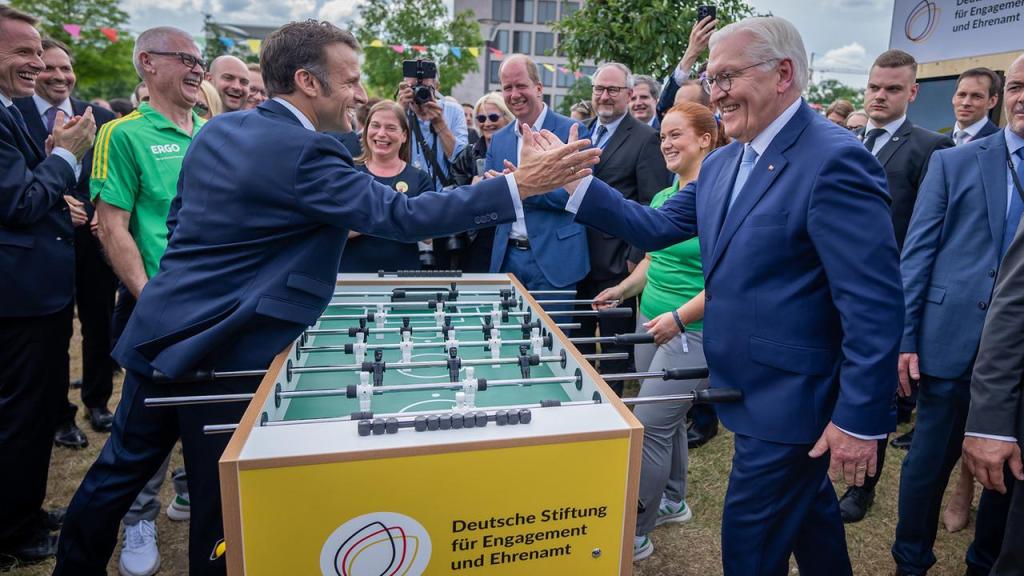
Macron’s state visit began in Berlin, where he met with President Frank-Walter Steinmeier. The two leaders participated in a table football match and visited the Democracy Festival in the government district, celebrating 75 years of the Basic Law. Macron stressed the indispensability of German-French relations for Europe and warned against the threat of nationalism. He highlighted the importance of voting in the upcoming European elections to counter the rise of right-wing parties.
Despite occasional disagreements between Berlin and Paris, Macron and Steinmeier aim to send a message of unity and solidarity during the state visit. Macron’s call for greater European autonomy in defense and protection against unfair competition from China and the USA has clashed with Chancellor Olaf Scholz’s commitment to transatlantic orientation and economic ties with China. The recent Ukraine conflict has also caused tensions, with Macron considering sending ground troops and providing missiles to Ukraine, while Scholz opposes these actions.
This state visit holds historical significance as it commemorates the 80th anniversary of the D-Day landings and the deep-rooted Franco-German friendship. Macron and his wife, Brigitte, will travel to Dresden, where the French President will deliver a speech on European politics. He will then be awarded the International Peace Prize of Westphalia in Münster, with Steinmeier delivering the laudation. The visit will conclude with the German-French Council of Ministers meeting at Schloss Meseberg.
In summary, Macron’s state visit to Germany serves to strengthen Franco-German ties, emphasize the importance of defending democracy, and commemorate historical milestones. While differences exist, both sides maintain the fundamental strength of the relationship. The visit also highlights the significance of the upcoming European elections and warns against the rise of nationalism and authoritarianism in Europe.
 TheLittleTwentieth - Renowned Papers Edition, AI Infused