Local sources from Indonesia: BBC.com, Al Jazeera English.
UK coverage: The Guardian.
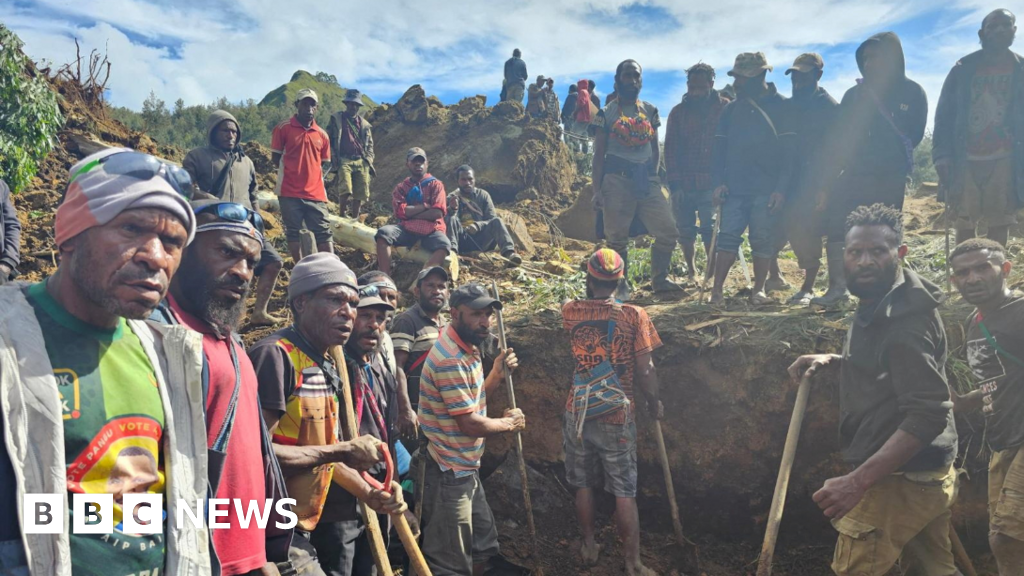
Rescue efforts in Papua New Guinea are being hampered by difficult conditions after a landslide buried hundreds of people. Unstable terrain, remote locations, and damaged roads have made it challenging for emergency crews to reach the affected area. The main road remains cut off, and the only access is via helicopter. The United Nations is preparing to distribute food and water and set up evacuation centers, while local residents continue to search for survivors using shovels, sticks, and their bare hands.
According to the United Nations, the devastating landslide in Papua New Guinea has claimed the lives of approximately 670 individuals. The impact of the landslide in the remote Enga province is even more severe than initially anticipated, with over 150 houses completely buried. The rescue operation is fraught with danger due to ongoing land movement and falling rocks, as well as the risk posed by flowing water. Local residents have been forced to evacuate 250 homes in areas unaffected by the landslide due to cracks in the ground.
The International Organization for Migration has increased its estimate of the death toll to over 670, based on calculations by Yambali village and Enga provincial officials. The situation remains dire, with the land still sliding and water running, creating a massive risk for everyone involved. Only five bodies and a leg of a sixth victim have been recovered so far, while seven people, including a child, have received medical treatment.
The rescue and relief efforts are being hampered by damaged infrastructure and the unstable ground, making it difficult for rescuers to reach the area. The main road has been cut off by about 200 meters, hindering relief efforts. Heavy earth-moving equipment is yet to arrive at the location, which is 600 kilometers northwest of Port Moresby. The landslide, consisting of car-sized boulders, uprooted trees, and churned-up earth, is thought to be 8 meters deep in some areas.
The catastrophe has not only claimed lives but has also wiped out the village’s livestock, food gardens, and sources of clean water. Government authorities are working to establish evacuation centers on safer ground on either side of the massive debris. However, the land has not settled yet, posing further challenges to the rescue operations.
Efforts are underway to provide aid and support to the affected region. The United Nations is preparing to distribute food and water and set up evacuation centers. The United States and Australia have expressed their readiness to provide additional assistance. The government of Papua New Guinea is expected to decide whether to officially request more international help by Tuesday.
As the rescue efforts continue, local residents are tirelessly searching for survivors using shovels, sticks, and their bare hands. The difficult conditions, including the unstable terrain, remote locations, and damaged roads, make this a challenging operation. The only access to the affected area is via helicopter, as the main road remains cut off. The situation remains critical, and every effort is being made to reach those who are still buried and provide them with the necessary aid and support.
 TheLittleTwentieth - Renowned Papers Edition, AI Infused