Local sources from Egypt: sawaleif.com, الرئيس نيوز.
UK coverage: The Independent.
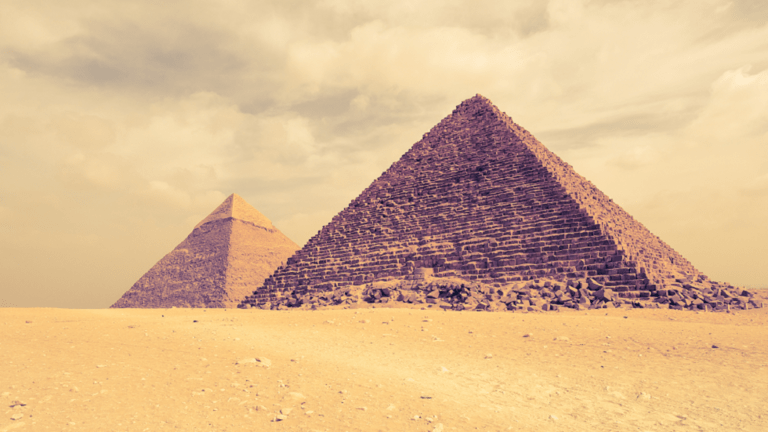
Archaeologists may have solved the mystery of how Egypt’s pyramids were built. New evidence suggests that the pyramids, including the Great Pyramids of Giza, were constructed along an abandoned branch of the Nile River. Researchers used satellite imagery, geophysical surveys, and sediment cores to confirm the presence of river sediments and former channels near the pyramids. They believe that this branch of the Nile was used to transport construction materials to the pyramid sites.
According to a report from sawaleif.com, scientists from the University of North Carolina Wilmington studied satellite images to locate the potential site of a former river branch that extended along the slopes of the Western Desert Plateau, near the pyramids. They used geophysical surveys and sediment cores to confirm the presence of river deposits and former channels beneath the surface. The study revealed the existence of a former river branch that was 64 kilometers long, which has since dried up and disappeared under agricultural lands. The research team explained that the increase in sand accumulation carried by winds, associated with the significant drought that began around 4200 years ago, could be one of the reasons for its disappearance. This finding may explain the positioning of 31 structures, including the Giza complex, in this uninhabited part of the desert. The researchers propose that the river branch played a role in the construction of the pyramids, serving as a waterway for transporting workers and construction materials to the pyramid sites.
The study, published in the journal Communications Earth & Environment, sheds new light on the concentration of pyramids in a specific area along the narrow desert strip. The researchers suggest that the river branch, referred to as the Pyramid Branch, may have been used as a waterway during the construction of the pyramids.
In a separate news article from الرئيس نيوز, it is reported that the Arab Summit held in Bahrain fell short of expectations. Dr. Hassan Salama, a professor of political science, expressed disappointment with the summit’s outcomes, stating that there were expectations for stronger decisions. While there was consensus on the humanitarian catastrophe and aggression faced by the Arab nations, there was no agreement on a mechanism to subdue Israel. The professor highlighted the need for a unified approach to address the ongoing issues in the region.
In conclusion, the recent discovery of the potential river branch near the pyramids offers a new perspective on how these ancient structures were built. The presence of river sediments and former channels supports the theory that the Nile River played a crucial role in transporting construction materials to the pyramid sites. This finding provides valuable insights into the engineering capabilities of the ancient Egyptians. Meanwhile, the Arab Summit’s failure to reach strong decisions highlights the challenges faced by Arab nations in addressing the ongoing conflicts in the region. The lack of consensus on a mechanism to subdue Israel reflects the complexities of the political landscape in the Middle East.
 TheLittleTwentieth - Renowned Papers Edition, AI Infused