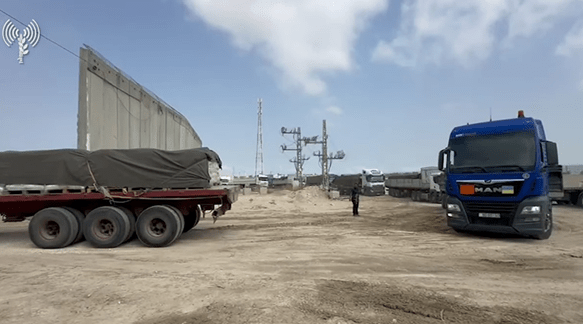
Local sources from Israel: IDF, מידה.
UK coverage: BBC.
In a breaking news development, the United Nations reports that nearly 450,000 Palestinians have fled from the city of Rafah in the past week as Israeli tanks continue to advance into southern Gaza. The situation is dire, with the UN agency for Palestinian refugees, Unrwa, expressing concern over the constant exhaustion, hunger, and fear faced by the displaced people. Adding to the crisis, another 100,000 individuals have been forced to leave their homes due to new Israeli operations in northern Gaza.
The Israeli Defense Forces (IDF) have launched a large-scale operation, codenamed ‘Shield of Protection,’ to secure the country’s border. The IDF aims to prevent illegal border crossings and ensure the safety of Israeli citizens. To achieve this, a significant number of troops have been deployed, along with advanced surveillance technology, to monitor and control the border areas. The operation is in response to an increase in attempted infiltrations and smuggling activities in recent months. The primary focus is dismantling criminal networks involved in human trafficking, drug smuggling, and arms trafficking. The IDF is collaborating closely with other security agencies to gather intelligence and conduct targeted operations against these criminal elements. Additionally, the operation involves the construction of new border barriers and reinforcing existing ones to prevent unauthorized entry and enhance overall security infrastructure.
The Israeli government emphasizes that the operation is being carried out with utmost respect for human rights and international law. Efforts are being made to minimize civilian disruptions, ensuring that only those involved in illegal activities are targeted. The government is committed to protecting its borders and ensuring the safety of its citizens. The operation will continue until the border is fully secured and all threats are neutralized.
In response to an appeal to the Supreme Court by the organization ‘Gisha,’ the Israeli government has released data revealing the extent of humanitarian aid entering the Gaza Strip in recent months. Surprisingly, the amount of aid has increased and now surpasses levels seen before the outbreak of the war. The data shows that as of April 12, over 22,763 trucks entered the Gaza Strip, carrying approximately 428,710 tons of aid. The aid includes food, medical equipment, water, shelter equipment, and mixed equipment. Additionally, 170,000 liters of fuel enter the Gaza Strip every two days, along with four cooking gas canisters daily for several months now.
While a relatively small portion of aid reaches the northern part of the Strip, even that is changing rapidly. The number of trucks crossing the Netzarim checkpoint into the northern part of the Strip has more than doubled in recent weeks. The current rate of incoming trucks is the highest ever recorded. During the early weeks of providing aid during the stages of the war, only a few hundred trucks entered the Strip. However, during the first lull in November, over 1,000 trucks entered. Aid volumes decreased during the offensive but have recently reached levels of 1,250 trucks per week.
Despite the increase in aid, the Israeli government acknowledges that Hamas, the terrorist organization controlling the Gaza Strip, retains significant control over the distribution of humanitarian aid. Hamas prevents some aid from reaching the residents of the Strip, and there are reports of threats against Palestinians who cooperate with Israel in securing aid convoys.
The data released by the government indicates that Hamas receives more humanitarian supplies than ever before, even without any agreements or deals. This has led to Hamas demanding more than just the release of prisoners and the transfer of supplies in current negotiations. Their demands now include a cessation of hostilities and the lifting of the siege on Gaza.
As the situation in Gaza worsens, the international community must closely monitor the impact of Israeli military operations on the Palestinian population and work towards a sustainable resolution that ensures the safety and well-being of all parties involved.
 TheLittleTwentieth - Renowned Papers Edition, AI Infused