Local sources from United Kingdom: BBC, The Guardian.
UK coverage: BBC.com.
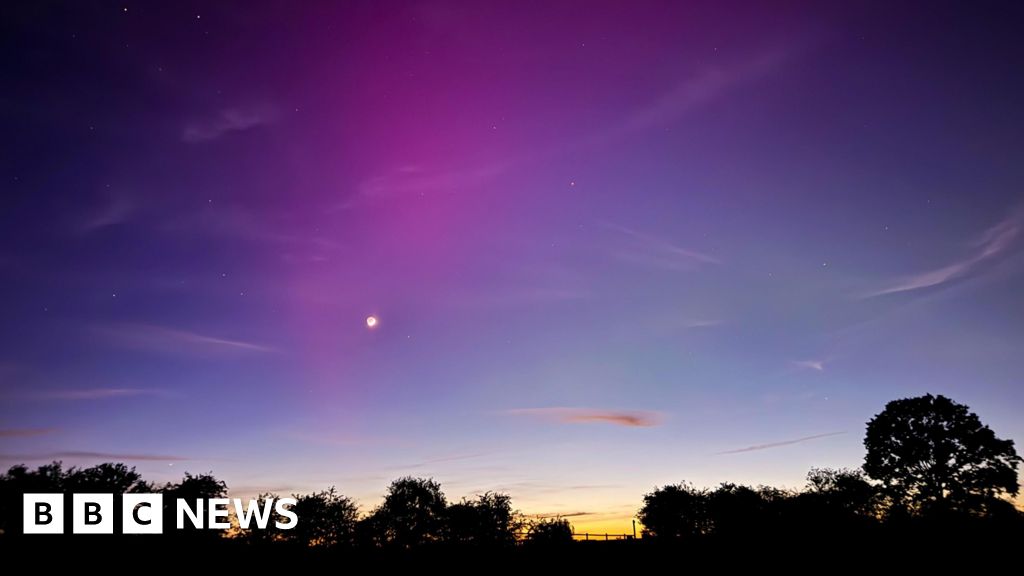
The Northern Lights, also known as the Aurora Borealis, put on a stunning display across the UK after a solar storm caused by a coronal mass ejection from the Sun reached Earth on Sunday. This rare occurrence delighted people in various locations, including Scotland, Northern Ireland, and Northern England, who took to social media to share their awe-inspiring photos and videos of the phenomenon. The Northern Lights are a result of charged particles from the Sun interacting with Earth’s magnetic field.
According to BBC Weather, clear skies on Friday evening made sightings possible from most parts of the UK, with people in Northern Ireland, Scotland, and northern parts of England having a higher likelihood. BBC Weather presenter Elizabeth Rizzini expressed excitement about the fantastic conditions and clear skies, stating that the lights would likely be visible the following night as well. The Met Office also confirmed that conditions could continue on Saturday night, particularly in Scotland, Ireland, and parts of northern England and Wales.
The Guardian reported that the aurora borealis dazzled not only the UK but also Europe and the northern hemisphere. Rare sightings were reported in Whitley Bay, Essex, Cambridgeshire, and Wokingham in Berkshire, as well as in Suffolk, Kent, Hampshire, and Liverpool. Kathleen Cunnea from Great Horkesley, Essex, described the experience as absolutely stunning. Sightings were also documented in Ireland, with images of the lights over Dublin and above Shannon airport shared by Met Éireann.
The National Oceanic and Atmospheric Administration (NOAA) in the US issued a rare severe geomagnetic storm warning, alerting operators of power plants and spacecraft in orbit to take precautions. The storm was expected to produce northern lights as far south as Alabama and northern California. Social media was flooded with photos and videos from excited viewers in these unexpected locations, expressing their amazement and likening the experience to a religious or otherworldly encounter.
Aurora displays occur when charged particles collide with gases in the Earth’s atmosphere around the magnetic poles. While most of this activity takes place within a band known as the aurora oval, covering latitudes between 60 and 75 degrees in the northern hemisphere, strong activity can expand the display to cover a greater area, allowing for occasional sightings further south.
The solar storm, caused by a large sunspot cluster, produced several moderate to strong solar flares, extending the visibility of the Northern Lights further south than usual. Rob Steenburgh, a scientist with NOAA’s space weather center, emphasized that this celestial gift required no special effort from people on Earth. He also highlighted the potential impact of the storm on GPS signals and ground receivers, which could experience temporary outages.
While the storm is expected to peak on Friday or early Saturday, geomagnetic storming is highly likely to persist through the weekend. Experts advise finding a location with minimal light pollution and looking north for the best sightings of the aurora borealis. The magical experience of witnessing this natural phenomenon has brought people together on social media, with many expressing their appreciation for nature’s wonders.
In conclusion, the Northern Lights’ spectacular display across the UK and beyond has captivated people’s imaginations and provided a moment of awe and wonder amidst the challenges of daily life. As the solar activity continues to ramp up, scientists and space agencies eagerly observe and study these events, appreciating the opportunity to witness and learn from the beauty and power of the universe.
 TheLittleTwentieth - Renowned Papers Edition, AI Infused