Local sources from Brazil: bps.pt, Poder360.
UK coverage: The Guardian.
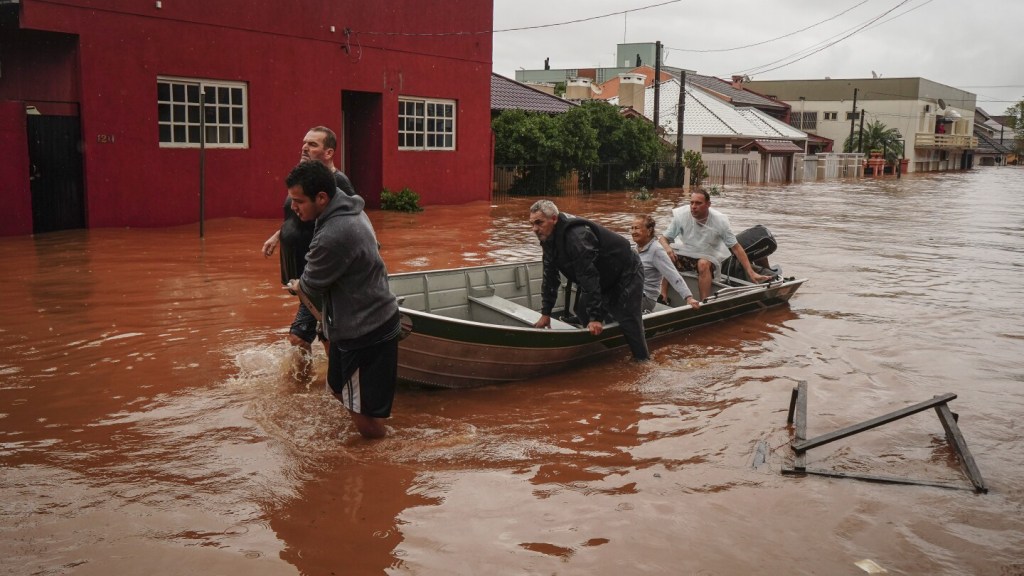
Heavy rains in the southern Brazilian state of Rio Grande do Sul have caused the worst floods in 80 years, resulting in the death of 37 people, with 74 still missing. This is the fourth environmental disaster in the past year, following floods in July, September, and November that killed a total of 75 people. The flooding has surpassed levels seen during a historic 1941 deluge, with water levels reaching their highest in nearly 150 years. The heavy rains are expected to continue until Saturday, and the situation is expected to worsen in the state capital, Porto Alegre.
In addition to Brazil, floods in Russia and Kazakhstan have also wreaked havoc, forcing the evacuation of over 100,000 people. Kazakh President Kassym-Jomart Tokayev declared the floods to be the worst in the country in 80 years. The Ural River, originating in Russia and flowing into the coast of Kazakhstan, has exceeded its water level, causing cities near the border to be affected. The Russian city of Orenburg, located near the Ural River, is on high alert as the water level continues to rise. Last week, a dam in Orsk was breached due to the floods. The situation is expected to peak on Wednesday. The Western Siberia region is also at risk of flooding in the coming days, particularly the Ishim River. The Minister of Emergencies, Alexander Kurenkov, has traveled to Tyumen to assess the risks.
These devastating floods in different parts of the world highlight the increasing frequency of extreme weather events, which scientists attribute to human-caused climate change. The effects of El Niño have been particularly dramatic this year, causing droughts in the Amazon region and heavy rains in Brazil and other parts of South America. The state of Rio Grande do Sul in Brazil, located in a region prone to intense rainfall, is predicted to continue experiencing increased precipitation. As the world grapples with the consequences of climate change, it is crucial to prioritize measures to mitigate its impact and protect vulnerable communities from such disasters.
 TheLittleTwentieth - Renowned Papers Edition, AI Infused