Local sources from Indonesia: BBC.com, CNN Indonesia.
UK coverage: Euronews.
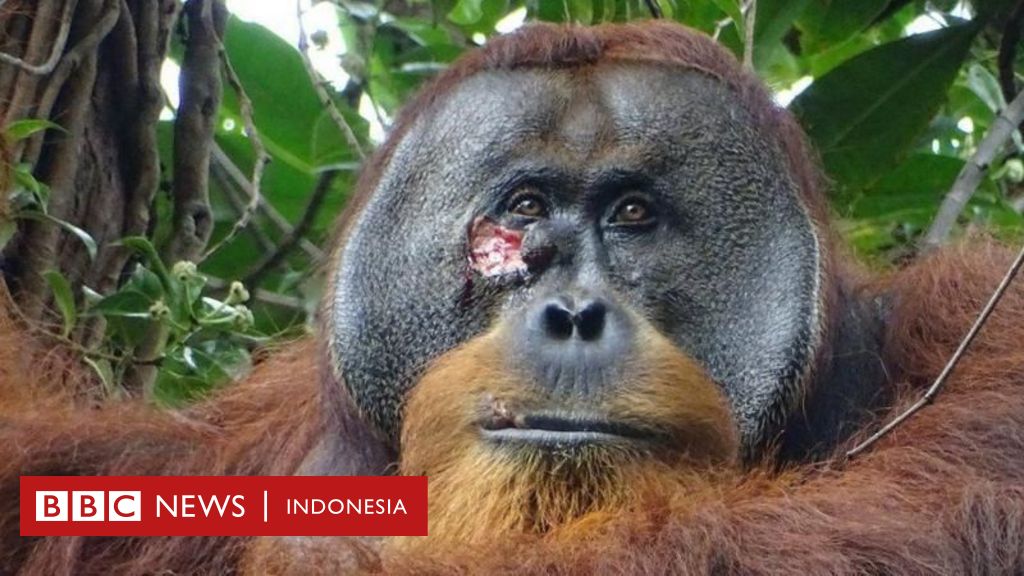
Scientists have observed a wild orangutan using a medicinal plant to treat a wound, marking the first time such behavior has been documented. The orangutan, named Rakus, plucked and chewed leaves from a plant used by people in Southeast Asia to treat pain and inflammation. He then applied the plant juices to an injury on his cheek and covered it with the chewed plant. The wound healed within a month. This finding adds to the growing body of evidence that animals have the ability to self-medicate using natural remedies found in their environment.
A recent study has revealed that orangutans have the ability to treat their fellow primates using herbal remedies. Orangutans are highly intelligent primates known for their practical skills, such as using tools to extract seeds and search for insects. It has now been discovered that they also possess the skill of being ‘doctors.’ Researchers have observed a male Sumatran orangutan treating an open wound on his face by using sap and chewing leaves from a plant known for its anti-inflammatory and pain-relieving properties.
The orangutan, named Rakus, was observed by researchers when his face was injured, possibly from a fight with a rival male orangutan. The research team noticed Rakus chewing on the stem and leaves of a plant called Akar Kuning, which is known for its anti-inflammatory and antibacterial properties. Rakus consumed the Akar Kuning plants for over 30 minutes and repeatedly applied the liquid to his cheek for seven minutes. He then applied the chewed leaves to his wound until it was completely covered. The use of natural ointment and consumption of leaves seemed effective in treating the wound, as the researchers did not observe any signs of infection, and the wound closed within five days. After a month, Rakus’ cheek wound was completely healed.
This behavior is significant as it is the first recorded instance of a wild creature treating a wound using medicinal plants. The researchers believe that this behavior could be derived from the same ancestors shared by humans and great apes. Dr. Isabella Laumer, a biologist from the Max Planck Institute in Germany and the lead author of the study, stated, ‘They are our closest relatives, and this once again shows the similarities we have with them. We have more similarities than differences.’
While chimpanzees have been observed using plants to treat worm infections and applying insects to wounds, this recent behavior in orangutans presents the first report of active wound management with biologically active substances in a large ape species. The researchers believe that this finding offers insights into the origins of human wound care and demonstrates the basic cognitive capacity required to produce such behavior likely already existed in our most recent ancestors.
The scientists concluded that Rakus was aware that he was using medicine because orangutans rarely consume that type of plant and due to the duration of his self-treatment. The researchers also noticed that Rakus rested longer than usual, indicating that he was trying to recover after the injury.
This discovery highlights the remarkable abilities of orangutans and their similarity to humans. Dr. Laumer suggested that in the coming years, more behaviors and abilities in orangutans that are very similar to humans may be discovered. The researchers now plan to observe other orangutans to see if they possess the same medical skills demonstrated by Rakus.
The use of natural remedies by animals adds to the growing body of evidence that animals have the ability to self-medicate using resources found in their environment. This finding not only enhances our understanding of animal behavior but also emphasizes the importance of preserving their habitats and the natural resources they rely on for their well-being.
 TheLittleTwentieth - Renowned Papers Edition, AI Infused