Local sources from Indonesia: PoskoNews.com, Mongabay.co.id.
UK coverage: Sky News.
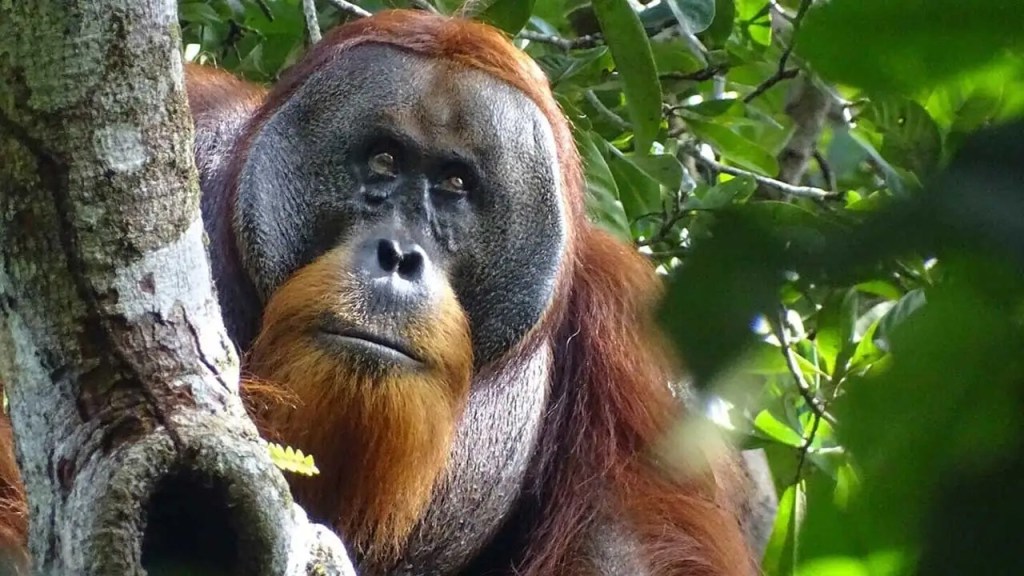
In a remarkable observation, scientists have witnessed a wild orangutan using a medicinal plant to treat a wound on its face. The male Sumatran orangutan, named Rakus, chewed the leaves of a climbing plant known as Akar Kuning and applied the resulting mixture onto the wound for over 30 minutes. The wound healed completely within a month, with no signs of infection. This is the first time a wild animal has been observed using a plant with known medicinal properties to treat wounds, providing insight into the evolution of wound medication knowledge in humans.
Orangutans in Indonesia have been found to use medicinal plants to disinfect wounds, suggesting they may be capable of self-medication. Scientists observed Rakus, a wild male Sumatran orangutan in Gunung Leuser National Park, plucking and chewing medicinal plant leaves used by communities throughout Southeast Asia to treat pain and inflammation. The orangutan then used its fingers to apply the plant sap to a wound on its right cheek, and pressed the chewed plant onto the open wound like an improvised bandage. The wound healed within a month without any issues. This behavior has never been observed before in a wild animal, highlighting the potential for self-medication in orangutans.
Research conducted in the Rawa Gambut Peat Forest Nature Laboratory in Sebangau National Park, Central Kalimantan, has shown that orangutans are capable of healing their own wounds using a specific plant extract. Orangutans chew the leaves of Dracaena cantleyi until they foam, then rub the foam onto their injured skin. The chewed leaves are then discarded. Local communities in Kalimantan also use the extract of Dracaena cantleyi leaves to treat pain in the arms, muscle aches, bone pain, and swelling. Chemical analysis of the extract revealed its anti-inflammatory properties, providing strong evidence that orangutans practice self-medication. This finding further emphasizes the importance of tropical forests as sources of medicinal plants.
The behavior of orangutans using medicinal plants to treat wounds raises questions about the evolution of first aid and what other plants orangutans might use for medicinal purposes. The similarities between orangutan DNA and human DNA, as well as the shared behavior of self-healing when injured, suggest that studying orangutans’ self-medication practices could provide valuable insights. The research conducted in Indonesia and Central Kalimantan has shed light on the remarkable ability of orangutans to heal themselves using natural remedies, highlighting the need for further exploration in this field.
As scientists continue to study orangutans and their behaviors, it is becoming increasingly clear that these incredible creatures possess knowledge of medicinal plants and their applications. The observation of wild orangutans using medicinal plants to treat wounds not only showcases their intelligence but also provides valuable insights into the evolution of wound medication knowledge in humans. This discovery highlights the importance of preserving their natural habitats and the biodiversity of tropical forests, which serve as invaluable sources of medicinal plants. The study of orangutans’ self-medication practices opens up new avenues for understanding the potential benefits of natural remedies and the role they play in the health and well-being of both humans and animals.
 TheLittleTwentieth - Renowned Papers Edition, AI Infused