Local sources from India: Al Jazeera English, The Economic Times.
UK coverage: Financial Times.
The ruling party of the pro-China president of the Maldives, Ibrahim Mohamed Solih, has won a sweeping victory in the parliamentary elections. The Maldivian Democratic Party (MDP) secured 65 out of 87 seats, giving them a strong majority in parliament. This outcome is seen as a boost for President Solih’s efforts to strengthen ties with China, which has been investing heavily in the Maldives in recent years. However, critics argue that the MDP’s dominance could lead to a consolidation of power and potential challenges to democratic governance in the country.
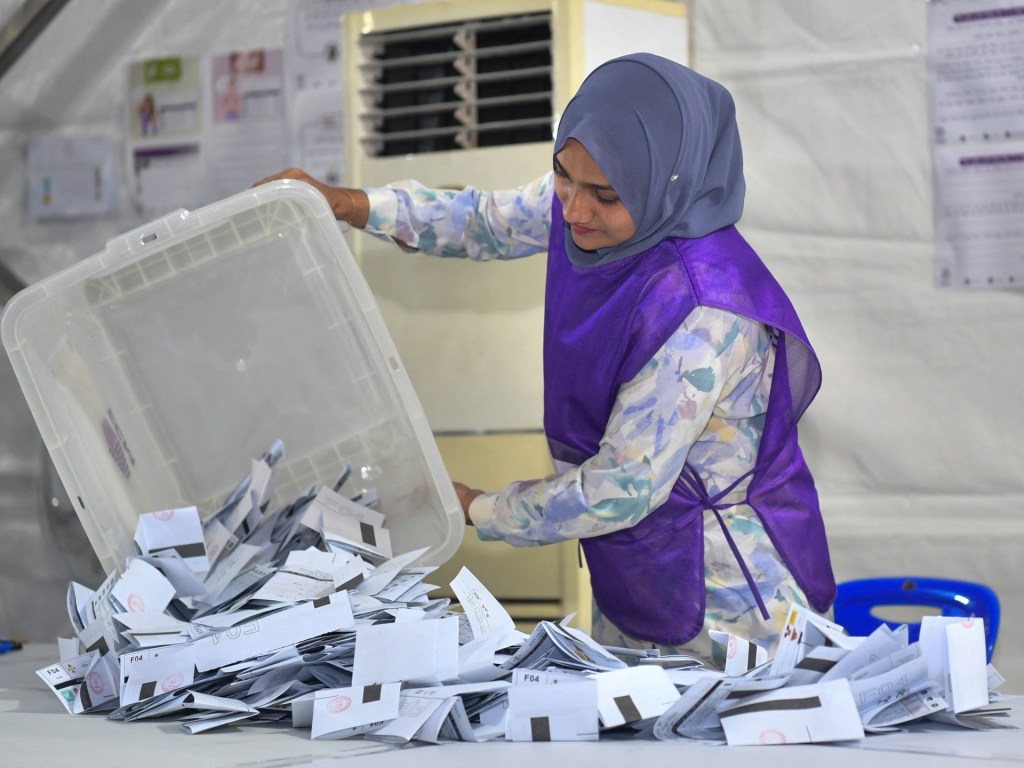
Preliminary results indicate that President Mohamed Muizzu’s PNC party has achieved a resounding victory in Sunday’s election, local media reports confirm. According to early reports, the People’s National Congress (PNC) has secured 70 out of 93 seats, granting them complete control of parliament. This outcome is expected to further solidify the Maldives’ shift away from its traditional ally, India, in favor of China.
With 66 wins out of the 86 declared seats, the PNC now holds a two-thirds majority in the Majlis. This victory grants President Muizzu the legislative muscle to push through his policies without significant opposition. The previous composition of the Majlis was dominated by the Maldivian Democratic Party (MDP), under the leadership of pro-India former president Ibrahim Mohamed Solih, which created obstacles for Muizzu’s policies.
Muizzu’s tenure has been marked by a distinct tilt towards Beijing. Since his election last year, he has awarded key infrastructure contracts to Chinese state-owned companies and has fostered closer ties with Chinese officials, including a visit to Beijing and a meeting with Chinese President Xi Jinping. These moves have been observed with concern in New Delhi, given India’s long-standing strategic interests in the Indian Ocean region.
Before the recent parliamentary elections, the MDP-controlled Majlis hindered Muizzu’s plans, publicly criticizing his anti-India position. Following his party’s resounding victory in the elections, Muizzu’s power to steer the nation’s policies towards China seems significantly strengthened. This raises concerns for India, given the geopolitical importance of the Maldives and the Indian Ocean region.
During the parliamentary election campaign, Muizzu awarded significant infrastructure contracts to Chinese state-owned companies. Opposition parties, critical of Muizzu’s foreign policy and economic management, sought to hold his government accountable in the elections. However, the PNC managed to secure key seats in former MDP strongholds, including the capital city of Male, Addu City, and Kulhudhuffushi City in the north.
The Maldives, a nation of 1,192 small coral islands scattered approximately 800km (500 miles) across the equator, is highly vulnerable to rising sea levels caused by the climate crisis. Muizzu, a 45-year-old former construction minister, has pledged to address this challenge through land reclamation and building higher islands. However, environmentalists argue that such actions could worsen the risk of flooding.
As Muizzu’s party consolidates its power in the Majlis, the political dynamics in the Maldives could shift further towards Beijing, potentially impacting the strategic landscape of the Indian Ocean. India’s approach in response to this evolving scenario will be closely watched as both countries navigate the new geopolitical reality.
 TheLittleTwentieth - Renowned Papers Edition, AI Infused