Local sources from Colombia: EL PAÍS, DW (Español).
UK coverage: Al Jazeera English.
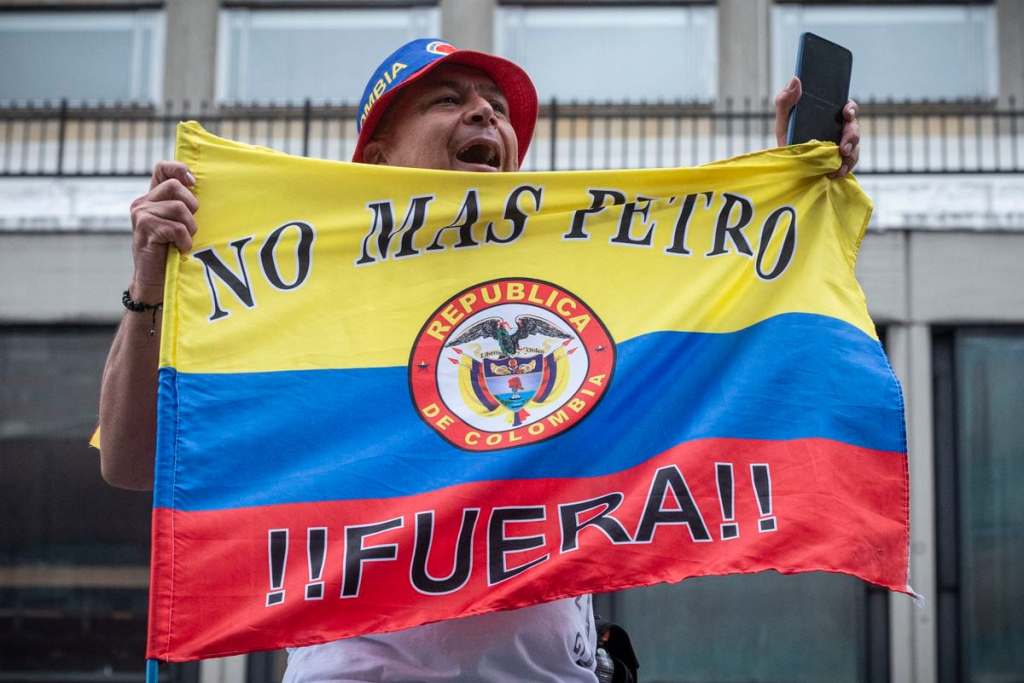
Tens of thousands of Colombians have taken to the streets in protest against President Gustavo Petro’s social reform agenda. The demonstrations, which have gained momentum recently, are in opposition to Petro’s proposed economic and social reforms, including healthcare reform. The government’s move to take control of two main insurers has angered the opposition. President Petro has labeled the protests a ‘soft coup’ and has called for a pro-government march on May 1.
The ‘March of the White Coats’ protests, organized by the Colombian Association of Surgery and later joined by the Colombian Association of Scientific Societies (ACSC), represent the discontent of thousands of people from different sectors. The mobilization aims to express opposition to President Petro’s government, particularly regarding the handling of the healthcare sector and his intention to convene a constituent assembly to reform the Constitution.
The demonstrations took place in several cities across the country, including Bogotá, Medellín, Cali, and Barranquilla. In Bogotá, the capital, the protesters gathered in the National Park before heading towards the central Plaza de Bolívar. The start of the demonstration was threatened by rain, but it did not deter the determined crowd. In Barranquilla, the main city in the Colombian Caribbean, a crowd dressed in white or wearing the national football team’s yellow jersey gathered in front of the Joe Arroyo Transmetro station. In Medellín, where Petro faces greater opposition, the crowd gathered at the intersection of Oriental and La Playa avenues, waving Colombian flags and green and white flags representing the Antioquia department.
While the Colombian opposition has previously protested against Petro’s government, this demonstration appears to be one of the largest due to the rejection of the government’s intervention in the healthcare system. Petro, who came to power in August 2022 as the first leftist to govern a country traditionally led by conservative elites, has been facing a decline in support. With a 60% disapproval rating, according to the Invamer polling firm, the president has been losing support from political forces in Congress and also in the public square where he is usually very active.
President Petro has called the protests a ‘soft coup,’ suggesting an attempt to overthrow his government. In response, he has called for a pro-government march on May 1. The situation remains tense as Colombians continue to voice their concerns and demands for change.
 TheLittleTwentieth - Renowned Papers Edition, AI Infused