Local sources from Serbia: Republika, Antena M.
UK coverage: Financial Times.
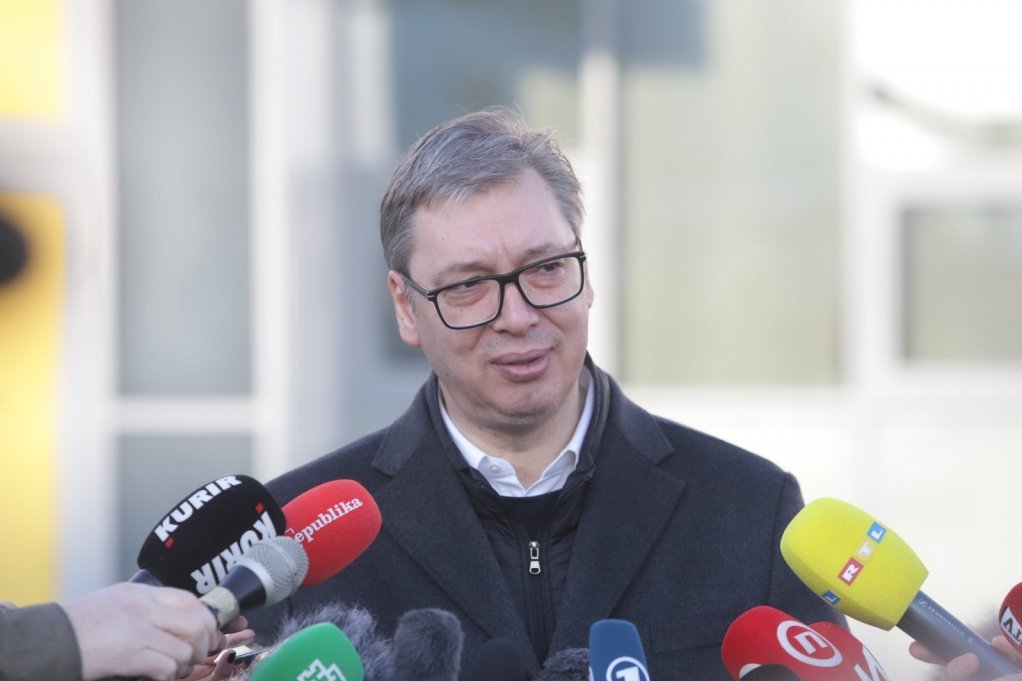
Aleksandar Vučić has emerged victorious in the Serbian election as the opposition crumbles. Vučić’s party, the Serbian Progressive Party (SNS), won a landslide victory, securing a majority in parliament. The opposition parties failed to make significant gains, with some even failing to pass the threshold to enter parliament. This strong showing for Vučić solidifies his hold on power in Serbia and raises concerns about the state of democracy in the country.
The Washington Post noted that the results of the parliamentary elections were expected, and that there were many complaints during the election day regarding the regularity and controversial buses from Bosnia and Herzegovina near the Belgrade Arena. Euronews reported that Prime Minister Ana Brnabić, with the message ‘Welcome to the celebration,’ announced the first voting results to the nation. According to Bloomberg, Serbian President Aleksandar Vučić, judging by the initial voting results across the country, has an open path to smoothly extend his decade-long rule.
The triumph of the ‘Aleksandar Vučić – Serbia Must Not Stop’ list surprised few of the leading world media. Reuters, while noting that the victory of the ‘Aleksandar Vučić – Serbia Must Not Stop’ list was quite expected, added that his position was somewhat shaken after the tragedies in May.
Following Aleksandar Vučić’s election victory and the support he received from the President of the Montenegrin Parliament, Andrija Mandić, in his election headquarters, the Croatian press notes that this is a historic humiliation for Montenegro, as well as significant who accompanied Vučić during the night of his electoral triumph.
Jutarnji list wrote that ‘Vučić has trembled and embraced all the right-wing sentiments of the majority of Serbs who, whether they admit it or not, hope for a Russian victory in Ukraine, which they believe would enable them to seek ‘revenge’ and a rematch for their defeats in the wars of the 90s.’
Vučić’s victory in the parliamentary elections in Serbia has, in football terms, scored three points – power, the support of Republika Srpska, and admittedly only symbolically – the ‘annexed’ former renegade Montenegro. This is evident from the headlines of media reports on voting in the diaspora in Montenegro.
Vučić has simply absorbed all these numerous obscure nationalist-conservative right-wing parties because what use are they when Vučić is all that matters! Vučić is now even more right-wing, and there is no longer a bizarre option like ‘Milica Zavetnica’ or ‘Boško Dveri’ for him to wave at Brussels or deceive his own public with a false threat. Furthermore, he has swallowed Dačić and his pro-Milošević SPS with all its Greater Serbian politics and reminiscences.
Aleksandar Vučić’s victory in the Serbian elections has raised serious concerns about the state of democracy in the country. The strong showing of Vučić’s party and the support he received from the President of the Montenegrin Parliament, Andrija Mandić, in his election headquarters, has been seen as a historic humiliation for Montenegro. Vučić has embraced the right-wing sentiments of the majority of Serbs, and has absorbed numerous obscure nationalist-conservative right-wing parties. With his party’s victory, Vučić has scored three points – power, the support of Republika Srpska, and symbolically – the ‘annexed’ former renegade Montenegro.
 TheLittleTwentieth - Renowned Papers Edition, AI Infused