Local sources from Italy: Sky Tg24, Fanpage.it.
UK coverage: The Guardian.
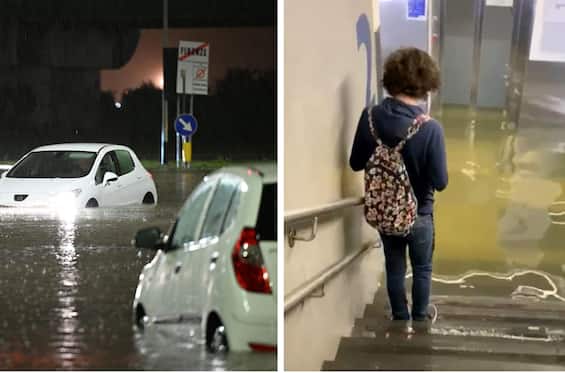
Storm Ciarán has caused severe flooding in central Italy, resulting in the deaths of seven people and leaving one person missing. The deluge began on Thursday, causing rivers to burst their banks and forcing hundreds of people to evacuate their homes. Although there were concerns that the Arno River could flood Florence, the historic city was spared major incident. The Italian government has declared a state of emergency and allocated €5 million to assist the affected areas. Italy, which is vulnerable to the impacts of climate change, has experienced multiple instances of flooding in recent months.
Two deaths have been reported in Tuscany and one person is missing in Veneto due to the bad weather. An 85-year-old man was found dead in his ground floor house in Montemurlo, in the Bagnolo district, on Riva Street. The man was found submerged in water, in a completely flooded room. Rescuers speculate that the elderly man was unable to reach higher floors and drowned, but only a more thorough examination will clarify the cause of death, which could also be related to a sudden illness during the emergency. A second victim was reported in the municipality of Rosignano (Livorno). In Veneto, a firefighter who was off duty and helping his father to place sandbags along the bank of a stream in Belluno is missing. The man slipped and fell into the swollen watercourse due to the heavy rains, in the area between Puos d’Alpago and Bastia (Belluno). Firefighters are currently searching for him, but the precipitation is hindering the operations.
The Bisenzio River overflowed in two points in the town of Campi Bisenzio (Florence), at Ponte alla Rocca in the historic center, and at Ponte a Capalle. It also overflowed in Prato, in the Santa Lucia neighborhood. The river swept away parked cars. There are also significant issues in the city, including the closure of all underpasses and water entering the Santo Stefano hospital, flooding the basements and part of the ground floor. Furthermore, the central station square is closed and also flooded. The Furba stream in Seano has also overflowed, causing flooded roads.
Experts from the Region are expecting a strong flood of the Arno River in the coming hours, with the peak expected to pass through Pisa tomorrow, Friday, November 3, at midnight. Trenitalia also informs that train services may be subject to changes, and regional trains may experience cancellations, delays, or extended interruptions. Therefore, Trenitalia advises to avoid or limit train travel to only essential trips.
A yellow alert has been issued in Milan, where a few days ago the Seveso River overflowed causing floods and damage. A red alert has been issued in Friuli-Venezia Giulia, where a red alert has been issued. The rain, arriving in areas already affected by disturbances, risks causing floods, landslides, mudslides, and the flooding of rivers and streams. High tides and storm surges are also expected in Muggia, in the province of Trieste.
In Liguria, the forecast of a ‘historic storm surge’ is causing concern, which is expected to hit the coasts due to storms in the area. It could also have repercussions further inland if it hinders or slows down the outflow of rivers and watercourses that flow into the sea.
In Trentino, there is a possibility of landslides and flooding, as well as snow in Alto Adige. An orange alert has been issued for the entire territory of Trentino. Heavy snowfall is expected in the mountains of Alto Adige, three weeks before the start of the ski season. Access to the Stelvio Pass has been closed, as the snow has reached half a meter.
In Sardinia, a notice of adverse weather conditions has been issued, valid until 6 pm tomorrow. The island will be affected by strong winds from the west and southwest, with gusts reaching gale force or strong gale force on the northwestern coasts and in the mountains.
The wave of bad weather that has been crippling many regions of central-northern Italy in recent days shows no signs of stopping, particularly in Tuscany where there have been six deaths and significant damage. Due to thunderstorms, strong winds, and a sharp drop in temperatures caused by the passage of Storm Ciaran over the Peninsula, the Civil Protection has issued a red alert for hydraulic risk in parts of Veneto for today, Saturday, November 4th. There is an orange alert for Lombardy, parts of Liguria, Emilia-Romagna, and a yellow alert for parts of Tuscany, Emilia-Romagna, Veneto, Liguria, Lombardy, Sardinia, Puglia, Basilicata, and the autonomous province of Trento, Campania, Calabria, and Sicily. Schools are closed in numerous municipalities in the provinces of Prato, Pistoia, and Pisa. The tail end of the European storm is also affecting the Balkans.
The Italian government has declared a state of emergency and allocated €5 million to assist the affected areas. Italy, which is vulnerable to the impacts of climate change, has experienced multiple instances of flooding in recent months. The situation is dire and the government is taking necessary steps to ensure the safety of its citizens. It is essential that people heed the warnings of the Civil Protection and take all necessary precautions to protect themselves and their families.
In the face of this tragedy, it is important to remember that Italy is not alone in this fight. The European storm is affecting the Balkans and other countries in the region, and it is our duty to stand in solidarity with them. We must come together to support those affected by this disaster and ensure that they receive the help they need.
The effects of climate change are becoming increasingly evident, and this storm is yet another reminder of the urgent need to take action. We must work together to reduce our carbon footprint and protect our planet for future generations. Only then can we hope to mitigate the devastating effects of natural disasters like Storm Ciarán.
 TheLittleTwentieth - Renowned Papers Edition, AI Infused