Local sources from Israel: Art Newspaper, Vatican News – English.
UK coverage: The Telegraph.
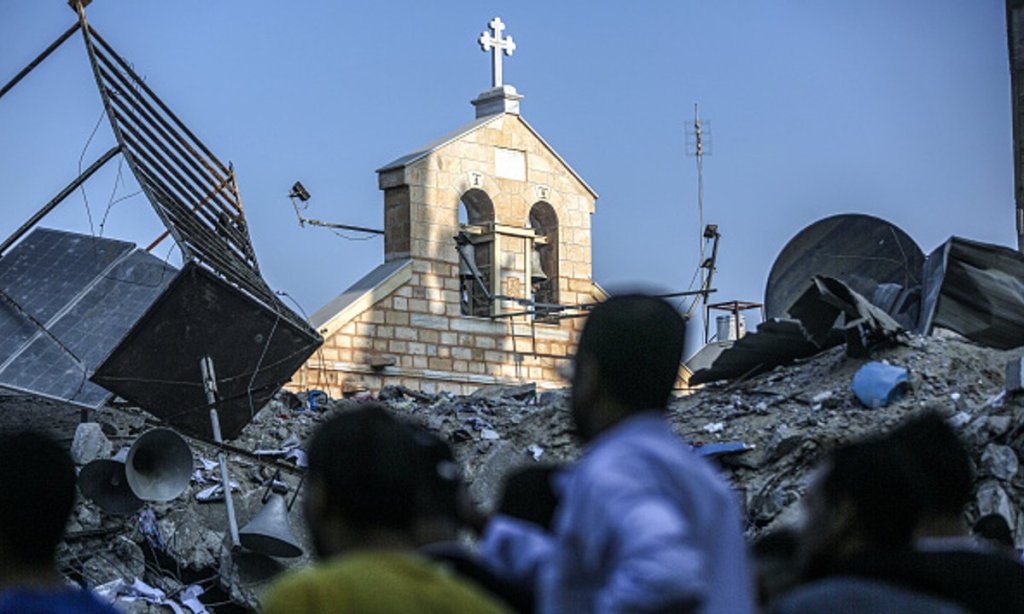
On Thursday evening, an air strike on a building adjacent to St. Porphyrios Greek Orthodox Church in Gaza killed several people taking shelter there, and has drawn strong condemnation from Christian Churches. According to the Greek Orthodox Patriarchate, at least 16 Christians, including 10 from one family, were killed in the blast, and several other people remain trapped under the rubble. The building, which was affiliated with the church, collapsed in the explosion caused by Israeli missile strikes.
Some 400 people, mostly Christians, had sought refuge in the compound when the war began nearly two weeks ago. A large number of people were injured by the blast, some seriously, among refugees Christians and Muslim families who were taking shelter in the church adjacent to the destroyed building.
In a statement, the Greek Orthodox Patriarchate condemned the strike, saying that “targeting churches and its affiliated institutions, in addition to the shelters they provide to protect innocent citizens, especially children and women who lost their homes as a result of the Israeli bombing of residential areas during the past thirteen days, constitutes a war crime that cannot be ignored.” The World Council of Churches (WCC) also strongly condemned the attack, calling upon the world community to enforce protections in Gaza for sanctuaries of refuge, including hospitals, schools, and houses of worship.
The St. Porphyrios Greek Orthodox Church is believed to be the third oldest church in the world, and is an important site for Christians in the Gaza Strip. It was last renovated in 1856, and shares architectural similarities with the Great Mosque of Gaza in Jabaliya, which was also destroyed earlier today by Israeli bombing.
The incident has sparked outrage among the international community, with many calling for an investigation into the attack and for justice to be served. As the situation in Gaza continues to deteriorate, it is essential that the sanctity of places of worship be respected and protected.
 TheLittleTwentieth - Renowned Papers Edition, AI Infused