Local sources from Israel: כלכליסט, ynet ידיעות אחרונות.
UK coverage: The Guardian.
Israel appears to be signaling a full invasion of Gaza, despite President Joe Biden’s hope for alternatives. Prime Minister Benjamin Netanyahu and Defense Minister Yoav Gallant have toured troops on the Gaza border, promising victory and stating that an invasion is imminent. While Biden mentioned discussions about alternatives to a ground assault, Israeli military officials have not ruled out the possibility. The US has warned that a ground assault could lead to reprisals from Hezbollah and create a humanitarian catastrophe, but leaving Hamas in power is also not an option for Israel.
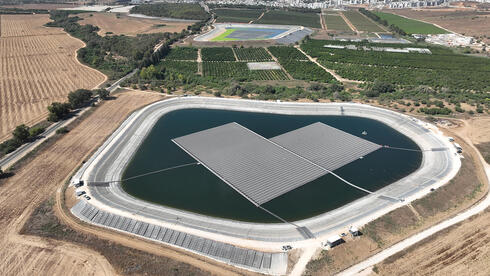
The implications of this situation are far-reaching, and the consequences of a full-scale invasion could be devastating. Israel’s transition to renewable energy sources, such as solar power, is of utmost importance in this context. According to a 2019 study by the Electricity Authority, in an extreme scenario that significantly affects Israel’s gas facilities, the repair could take up to a year. The implication is that during this time, Israel would have to generate electricity using expensive and polluting solar energy. In such a case, the use of renewable energy could result in significant health and financial savings and ensure the continuity of electricity supply.
The transition or enhancement of solar energy in Israel is a security blessing, according to Eli Sharvit, former commander of the Navy and current CEO and owner of Solax Israel, a company specializing in hybrid systems and energy storage that allows homes and businesses to become disconnected from the grid. “We are talking about distributed energy sources. It is impossible to shut down thousands of small power stations, unlike a single energy source that supplies electricity to thousands of homes. When we turn our homes green and energy-independent, we also become more resilient in terms of security,” he said.
The war is also shaking the hi-tech industry. Approximately 400 centers of multinational tech companies operate in the country, employing around 70,000 workers out of the total 400,000 employees in the Israeli hi-tech industry. Large development centers have been established here by many giant companies such as Intel, Apple, Google, IBM, Facebook, Microsoft, Nvidia, Oracle, Cisco, and many others. Alongside them, Israeli giant companies have also flourished, like Check Point and Medoc.
The future of the region is uncertain, and the implications of a full-scale invasion are yet to be seen. However, it is clear that renewable energy sources could play a crucial role in ensuring energy security in the region, and the adoption of solar energy could help Israel become more resilient in times of emergency. As the situation in the region continues to develop, it is important to keep an eye on the implications of this conflict and the potential of renewable energy sources to help mitigate the consequences of war.
 TheLittleTwentieth - Renowned Papers Edition, AI Infused