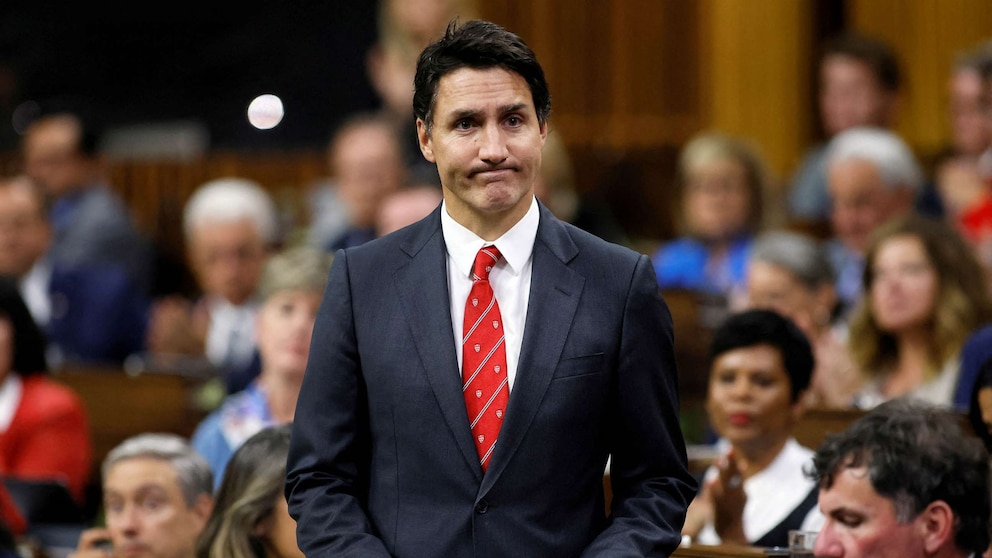
Canada has expelled a top Indian diplomat amid an investigation into the murder of a prominent Sikh leader in British Columbia. Canadian Prime Minister Justin Trudeau raised his concerns with India’s Prime Minister Narendra Modi at last week’s G20 summit in New Delhi. The slain leader, Hardeep Singh Nijjar, had been advocating for the creation of an independent Sikh homeland in India’s Punjab region.
The Canadian probe into Nijjar’s death has caused tensions between the two countries, with Canada accusing the Indian government of involvement, a charge India has rejected as “absurd”. In response, India’s foreign ministry expelled a senior Canadian diplomat and called on Canada to take action against “anti-India elements”.
The Canadian government has sent its national security adviser and the head of its spy service to India to present the Indian intelligence agencies with the allegations. Canada has also postponed a trade mission to India that was scheduled for October.
The Sikh independence, or Khalistan, movement is outlawed in India, where officials consider it and affiliated groups a national security threat. However, the movement still has some support in northern India, as well as countries such as Canada and the United Kingdom, which are home to a sizable Sikh diaspora.
Protests by pro-Khalistan groups in Canada have angered the Modi government, prompting it to summon the Canadian High Commissioner in New Delhi in March. Canada has a Sikh population of more than 770,000, or about 2% of its total population.
The World Sikh Organization of Canada called Nijjar an outspoken supporter of Khalistan who “often led peaceful protests against the violation of human rights actively taking place in India and in support of Khalistan”.
The expulsion of the Indian diplomat and the investigation into Nijjar’s death has been met with strong reactions from both Canada and India. Canadian Foreign Minister Mélanie Joly said Trudeau had raised the matter with US President Joe Biden and UK Prime Minister Rishi Sunak, while the White House National Security Council spokesperson Adrienne Watson stated that the US was “deeply concerned” about the allegations.
Indian authorities have targeted Sikh separatism since the 1980s, when an armed insurgency for an independent Sikh state began in Punjab state. In 1984, Indian forces stormed the Golden Temple in the state’s Amritsar city to flush out Sikh separatists, who had taken refuge there. The controversial operation killed around 400 people, according to official figures, although Sikh groups estimate the toll to be higher.
This news has been reported by renowned newspapers ABC News and FRANCE 24 English.
{
“Article_title”: “Canada Expels Indian Diplomat Amid Probe into Exiled Sikh Leader’s Murder”,
“Article_text”: “Canada has expelled a top Indian diplomat amid an investigation into the murder of a prominent Sikh leader in British Columbia. Canadian Prime Minister Justin Trudeau raised his concerns with India’s Prime Minister Narendra Modi at last week’s G20 summit in New Delhi. The slain leader, Hardeep Singh Nijjar, had been advocating for the creation of an independent Sikh homeland in India’s Punjab region.
The Canadian probe into Nijjar’s death has caused tensions between the two countries, with Canada accusing the Indian government of involvement, a charge India has rejected as “absurd”. In response, India’s foreign ministry expelled a senior Canadian diplomat and called on Canada to take action against “anti-India elements”.
The Canadian government has sent its national security adviser and the head of its spy service to India to present the Indian intelligence agencies with the allegations. Canada has also postponed a trade mission to India that was scheduled for October.
The Sikh independence, or Khalistan, movement is outlawed in India, where officials consider it and affiliated groups a national security threat. However, the movement still has some support in northern India, as well as countries such as Canada and the United Kingdom, which are home to a sizable Sikh diaspora.
Protests by pro-Khalistan groups in Canada have angered the Modi government, prompting it to summon the Canadian High Commissioner in New Delhi in March. Canada has a Sikh population of more than 770,000, or about 2% of its total population.
The World Sikh Organization of Canada called Nijjar an outspoken supporter of Khalistan who “often led peaceful protests against the violation of human rights actively taking place in India and in support of Khalistan”.
The expulsion of the Indian diplomat and the investigation into Nijjar’s death has been met with strong reactions from both Canada and India. Canadian Foreign Minister Mélanie Joly said Trudeau had raised the matter with US President Joe Biden and UK Prime Minister Rishi Sunak, while the White House National Security Council spokesperson Adrienne Watson stated that the US was “deeply concerned” about the allegations.
Indian authorities have targeted Sikh separatism since the 1980s, when an armed insurgency for an independent Sikh state began in Punjab state. In 1984, Indian forces stormed the Golden Temple in the state’s Amritsar city to flush out Sikh separatists, who had taken refuge there. The controversial operation killed around 400 people, according to official figures, although Sikh groups estimate the toll to be higher.
This news has been reported by renowned newspapers ABC News and FRANCE 24 English.”
}
 TheLittleTwentieth - Renowned Papers Edition, AI Infused