{
“Article_title”: “Morocco Earthquake: A Devastating Tragedy Leaves over 2000 Dead”,
“Article_text”: “On Friday night, Morocco was struck by a devastating earthquake, leaving over 2000 people dead and more than 2000 injured. The epicenter of the earthquake was located in the Al-Houz region, with a magnitude of 7 on the Richter scale. In response to the tragedy, King Mohammed VI of Morocco declared a three-day national mourning and ordered the acceleration of rescue operations.
International aid has been pouring in from countries such as Spain, the United States, France, and the United Kingdom, who have all sent search and rescue teams and medical aid to assist in the relief efforts. The United Nations Educational, Scientific and Cultural Organization (UNESCO) has also announced that it will assist Morocco in assessing the damage to archaeological sites and developing a special strategy for their restoration.
BBC reported that the death toll has risen to over 2,100, in addition to more than 2,400 injured. The Mediterranean Seismological Observatory announced that an earthquake measuring 4.5 on the Richter scale occurred, 77 kilometers southwest of Marrakech. Moroccan rescue teams, along with some international teams that have arrived in the country, continue their efforts to search for survivors under the rubble.
The Moroccan newspaper الأسبوع reported that Moroccan media outlets have published several photos showing the suffering of Moroccans affected by the destructive earthquake. Residents of Rabat, Casablanca, Agadir, and Essaouira felt the earthquake, and some citizens went out into the streets of these cities for fear of their homes collapsing.
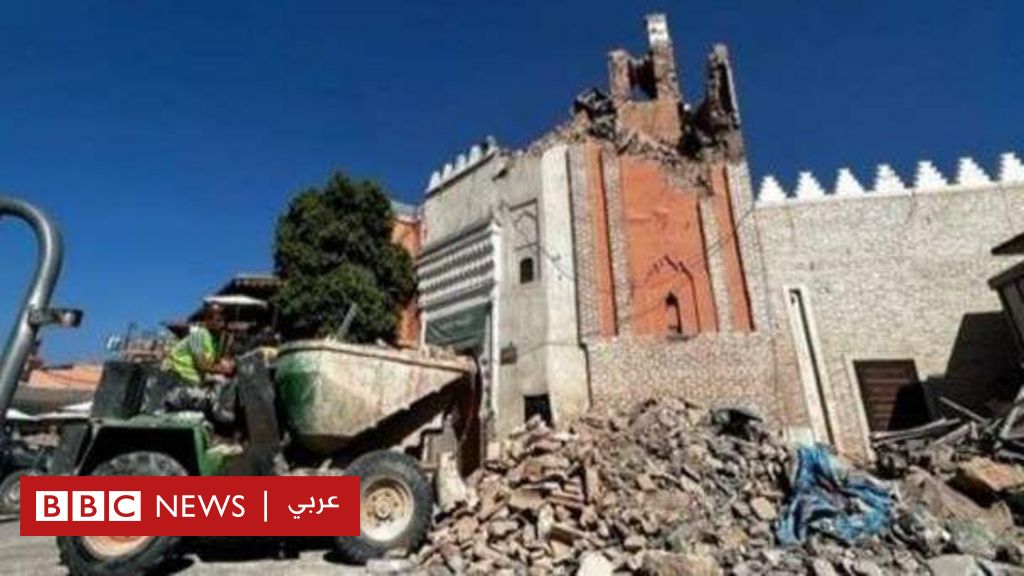
The earthquake has caused significant damage, with videos showing ancient villages on hilltops turned into rubble and dust. There are still families trapped under the rubble of their homes, and hospitals in Marrakech have witnessed an influx of injured people from various areas.
The North Africa region is prone to earthquakes due to it being close to the collision zone between two tectonic plates, the northward-moving African plate and the Eurasian plate in Europe. According to Ghassan Sweidan, Director of the Seismic Monitoring Center in Jordan, “Earthquakes only occur on the boundaries of faults on Earth and do not occur randomly.”
This tragedy is a reminder of the importance of international solidarity and assistance in times of crisis. This earthquake has been a devastating blow to the people of Morocco, and our thoughts are with the victims and their families.”
}
 TheLittleTwentieth - Renowned Papers Edition, AI Infused